Every successful American Bully breeding program is built on one critical decision: selecting the right dogs to breed.
No amount of marketing, pedigree hype, or social media popularity can overcome poor breeding stock. The dogs chosen as the foundation of a breeding program will influence every future generation through their genetics, structure, temperament, health, and overall quality.
For responsible breeders, selecting breeding stock is not about finding perfect dogs. It is about identifying dogs that consistently contribute positive traits while minimizing weaknesses.
This guide explains how breeders evaluate breeding stock and make informed decisions that improve the breed over time.
Why Breeding Stock Matters
Breeding stock is the foundation of every breeding program.
The dogs you choose today will influence:
- Future litters
- Program consistency
- Breed quality
- Reputation
- Long-term success
Strong breeding stock increases the likelihood of producing healthy, stable, well-structured dogs.
Poor breeding stock often creates problems that can take years to correct.
Responsible breeders think beyond the next litter and focus on the long-term future of their program.
What Makes Good Breeding Stock?
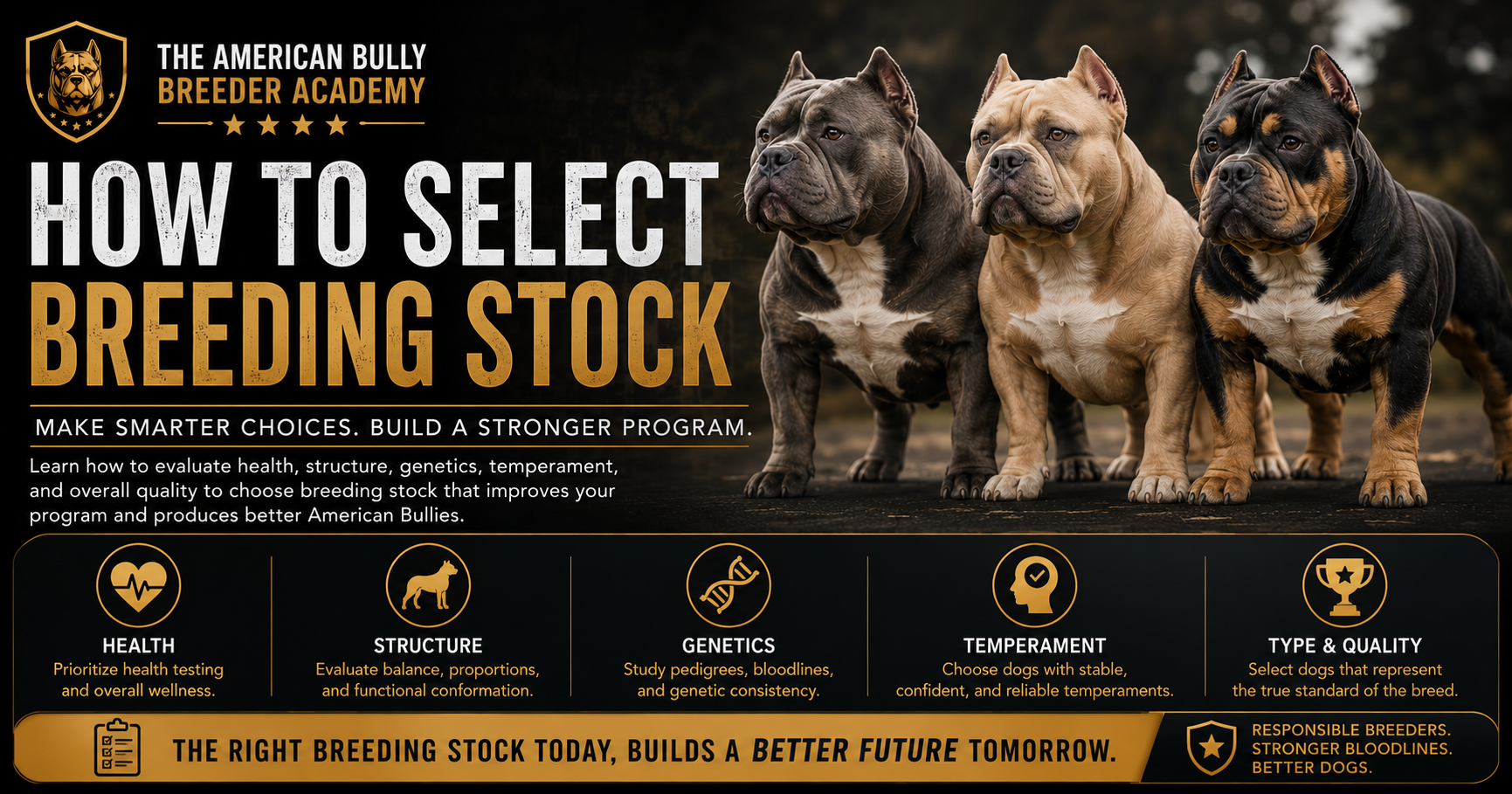
Good breeding stock is built on five core pillars:
Health
Healthy dogs create healthier future generations.
Structure
Correct structure supports movement, balance, and longevity.
Genetics
Strong genetics increase consistency and predictability.
Temperament
Stable, confident temperaments should always be prioritized.
Breed Type
The dog should represent the American Bully breed correctly.
Every breeding decision should evaluate all five factors together.
Health Comes First
No dog should enter a breeding program without a thorough health evaluation.
Health should never be sacrificed for:
- Color
- Size
- Popularity
- Pedigree
- Social media attention
Responsible breeders prioritize health before anything else.
Areas to Evaluate
- Overall physical condition
- Joint health
- Eye health
- Cardiac health
- Reproductive health
- Family health history
A healthy dog is one of the most valuable investments a breeder can make.
Continue Learning
→ Health Testing for American Bullies
Evaluate Structure Carefully
Structure influences:
- Movement
- Function
- Balance
- Athletic ability
- Longevity
Many breeding mistakes occur because breeders focus only on head size, color, or pedigree while ignoring structural weaknesses.
A structurally sound dog can contribute positive traits for generations.
Areas to Evaluate
Balance
Does the dog appear proportionate?
Topline
Is the topline strong and level?
Front Assembly
Are the shoulders properly placed?
Rear Assembly
Does the rear provide power and drive?
Feet
Are the feet tight and functional?
Movement
Does the dog move efficiently?

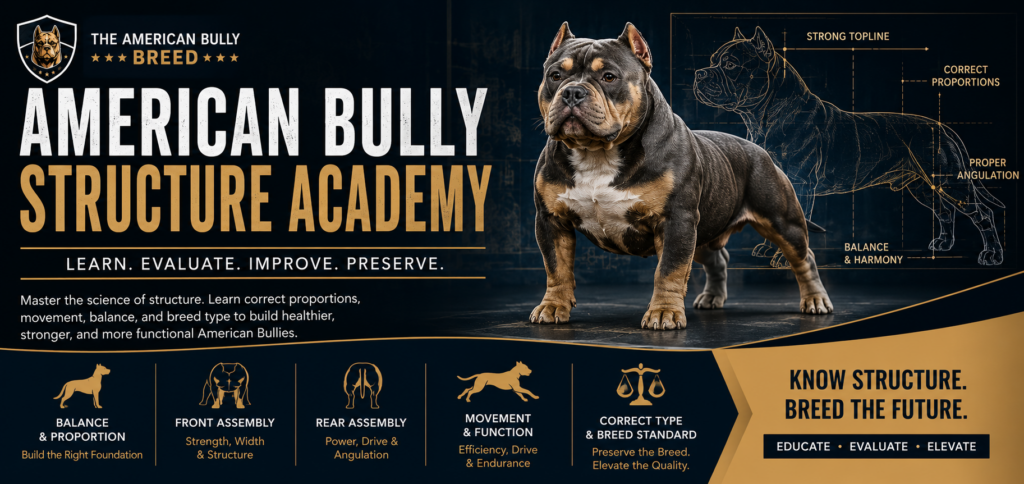
Master balance, proportions, movement, and breed-standard evaluation.
Continue Learning
→ American Bully Structure Academy
→ Why Structure Matters in American Bullies
→ American Bully Structure Guide
Learn to Identify Correct Structure
Master balance, proportions, movement, and breed-standard evaluation.
Genetics Matter More Than Appearance
Many breeders focus on what they can see.
Experienced breeders focus on what a dog can produce.
The pedigree often tells a deeper story than the dog standing in front of you.
Breeders should study:
- Ancestors
- Siblings
- Previous offspring
- Family consistency
- Genetic strengths
- Genetic weaknesses
Strong genetics help create predictable outcomes.

Understand bloodlines, pedigrees, inheritance, and breeding strategy.
Continue Learning
→ American Bully Genetics Explained
→ American Bully Bloodlines Explained
Understand the Pedigree
A pedigree is more than a list of names.
It provides insight into:
- Bloodline influence
- Trait concentration
- Consistency
- Potential risks
- Long-term breeding value
Breeders should study multiple generations before making breeding decisions.
A strong pedigree supports a breeding program’s goals.
Temperament Is Non-Negotiable
The American Bully is known for being:
- Confident
- Stable
- Friendly
- Trainable
- Family-oriented
Dogs with unstable temperaments should not contribute to future generations.
Temperament affects:
- Puppy placements
- Reputation
- Breed perception
- Owner satisfaction
Responsible breeders evaluate temperament just as carefully as structure.
Continue Learning
→ American Bully Temperament: Myth vs Reality
Evaluate the Entire Dog
One common mistake is focusing on a single trait.
Examples include:
- Color
- Head size
- Bone
- Popular bloodlines
Great breeding stock should be evaluated as a complete package.
Ask yourself:
- Does this dog improve my program?
- Does this dog represent the breed?
- Does this dog contribute more strengths than weaknesses?
Every dog has flaws.
The goal is identifying which dogs move a program forward.
Breeding Stock Should Complement Your Goals
The best breeding stock depends on your breeding goals.
For example:
Structure-Focused Programs
May prioritize balance, movement, and proportions.
Family Companion Programs
May prioritize temperament and stability.
Breed Preservation Programs
May prioritize overall breed type and consistency.
Not every quality dog fits every program.
The right dog is the one that helps achieve your long-term vision.
Red Flags to Avoid
Untested Dogs
Never assume health without evaluation.
Poor Structure
Structural weaknesses often become amplified over generations.
Unstable Temperament
Temperament problems should not be ignored.
Breeding for Trends
Trends change quickly.
Quality remains important forever.
Pedigree Without Performance
A famous pedigree does not automatically create a quality dog.
Breeding for Color Alone
Color should never outweigh health, temperament, and structure.
Questions Every Breeder Should Ask
Before using a dog in a breeding program, ask:
- Does this dog improve my program?
- Does this dog correct weaknesses?
- What strengths does this dog contribute?
- What weaknesses might this dog pass on?
- Have I evaluated its relatives?
- Have I evaluated previous offspring?
- Does this dog represent the breed correctly?
These questions help breeders make objective decisions.
Selecting Males vs Selecting Females
Many breeders focus heavily on studs.
In reality, both males and females are equally important.
A quality breeding program requires:
Strong Males
That consistently produce desirable traits.
Strong Females
That provide structure, temperament, maternal qualities, and consistency.
The foundation of many successful programs begins with exceptional females.
Building a Program One Generation at a Time
The best breeders think beyond individual dogs.
They focus on:
- Generations
- Consistency
- Improvement
- Long-term goals
Every breeding decision should move the program closer to its ideal vision.
Progress often happens gradually.
The most successful programs are built through patience and careful selection.
Final Thoughts
Selecting breeding stock is one of the most important responsibilities a breeder has.
The dogs chosen today will shape future generations and influence the success of an entire breeding program.
Responsible breeders evaluate health, structure, genetics, temperament, and overall breed quality before making breeding decisions.
When breeding stock is selected carefully and strategically, the result is stronger dogs, healthier bloodlines, and a better future for the breed.
Continue Your Breeder Education
Previous Pillars
→ How to Become an American Bully Breeder
→ Responsible American Bully Breeding Practices
→ American Bully Genetics Explained
→ American Bully Bloodlines Explained
→ American Bully Structure Academy
Related Education
→ American Bully Temperament: Myth vs Reality
→ Why Structure Matters in American Bullies
→ American Bully Structure Guide

Explore Capcity Bullys
See how structure, genetics, temperament, and breeding goals are evaluated in a real-world American Bully breeding program.
Breeder Academy Navigation
Previous: American Bully Structure Academy
Next: American Bully Whelping Guide
Related Pillars
→ Building an American Bully Breeding Program
→ Health Testing for American Bullies
→ American Bully Breeder Business Guide
FAQ Questions
What is breeding stock?
Breeding stock refers to the dogs selected to contribute genetically to future generations within a breeding program.
What should breeders look for when selecting breeding stock?
Breeders should evaluate health, structure, genetics, temperament, pedigree, breed type, and overall quality before making breeding decisions.
Is pedigree more important than structure?
No. Both pedigree and structure should be evaluated together. A famous pedigree cannot compensate for poor structure or temperament.
Why is temperament important in breeding stock?
Temperament is highly heritable and affects puppy behavior, owner satisfaction, and long-term breed reputation.
Should breeders select dogs based on color?
Color should never outweigh health, structure, temperament, or overall breed quality.