Structure is one of the most important aspects of the American Bully breed.
While many people are initially drawn to color, muscle, or head size, experienced breeders understand that structure determines far more than appearance. Correct structure affects movement, health, longevity, athletic ability, and overall breed quality.
Learning to evaluate structure like a breeder allows you to make better breeding decisions, select quality puppies, and preserve the future of the breed.
This guide will break down the major structural components every breeder and enthusiast should understand.
New to structure? Start with our pillar article: American Bully Structure Academy.
Why Structure Matters
Correct structure provides the foundation for:
- Efficient movement
- Proper balance
- Long-term soundness
- Reduced joint stress
- Breed type preservation
- Improved breeding decisions
A structurally sound dog is typically healthier, more functional, and better equipped for a long life.
Poor structure can contribute to movement inefficiencies, increased physical stress, and reduced overall quality.
For a complete overview of why structure should always be prioritized, read Why Structure Matters in American Bullies.
Evaluate the Dog as a Whole
One of the biggest mistakes new breeders make is focusing on a single trait.
A massive head, wide chest, or impressive muscle alone does not create quality.
Experienced breeders evaluate:
- Balance
- Proportion
- Movement
- Breed type
- Overall harmony
Every part of the dog should complement the others.
The goal is not exaggeration.
The goal is balance.
Remember, structure should always be evaluated alongside health, temperament, and breed purpose.
To understand how genetics influence structure, continue reading American Bully Genetics Explained and American Bully Bloodlines Explained: Understanding the Genetics Behind the Breed.
Head Evaluation
The head is an important component of breed type.
When evaluating an American Bully head, breeders look for:
Correct Proportions
The head should appear balanced with the body.
Expression
The dog should display a confident, alert, and stable expression.
Muzzle Length
Muzzles should remain functional and proportionate.
Skull Width
The skull should demonstrate breed type without becoming exaggerated.
Avoid selecting dogs solely based on extreme head size.
Function should always accompany breed type.
Breeders should remember that breed type and correct structure must work together to preserve the breed.
Front Assembly
The front assembly is responsible for support, balance, and movement efficiency.
Key areas include:
Shoulder Placement
Well-laid shoulders contribute to smoother movement.
Upper Arm Length
Proper upper arm length allows correct reach.
Chest Development
The chest should be broad yet remain functional.
Front Alignment
Front legs should remain straight and well-supported.
Poor front construction often results in inefficient movement and increased stress on joints.
Correct front construction is especially important when selecting future breeding stock.
For more information on breeding selection, visit How to Select Breeding Stock.
Topline Evaluation
A correct topline contributes significantly to overall balance and stability.
Breeders generally look for:
- A strong back
- Level appearance
- Structural support
- Stability during movement
A weak, roached, or severely dipped topline can negatively affect overall function and movement.
The topline should remain strong both standing and moving.
Structural weaknesses often become more apparent as dogs mature, making long-term evaluation essential.
Rear Assembly
The rear assembly provides drive, power, and propulsion.
Important evaluation points include:
Angulation
The rear should display balanced angulation.
Muscle Development
Proper muscle supports movement and athletic ability.
Rear Alignment
Rear legs should remain structurally sound and properly aligned.
Drive
Correct rears provide efficient movement without wasted motion.
Overly straight or excessively angulated rears can negatively impact movement and balance.
Rear structure contributes significantly to athletic movement and overall soundness.
Feet and Pasterns
Feet are often overlooked by inexperienced evaluators.
However, strong feet are essential for long-term soundness.
Breeders typically prefer:
- Tight feet
- Strong pasterns
- Proper alignment
- Stable support
Weak feet may contribute to movement inefficiencies and increased physical stress.
Strong dogs begin with strong foundations.
Understanding Balance and Proportion
Balance may be the single most important structural concept.
A balanced dog appears harmonious from every angle.
Nothing should appear:
- Excessive
- Out of proportion
- Weak
- Underdeveloped
The best American Bullies display:
✓ Balanced fronts and rears
✓ Proportional heads
✓ Correct substance
✓ Smooth movement
✓ Overall harmony
Great structure is rarely extreme.
It is balanced.
Responsible breeders prioritize balance over trends and exaggeration.
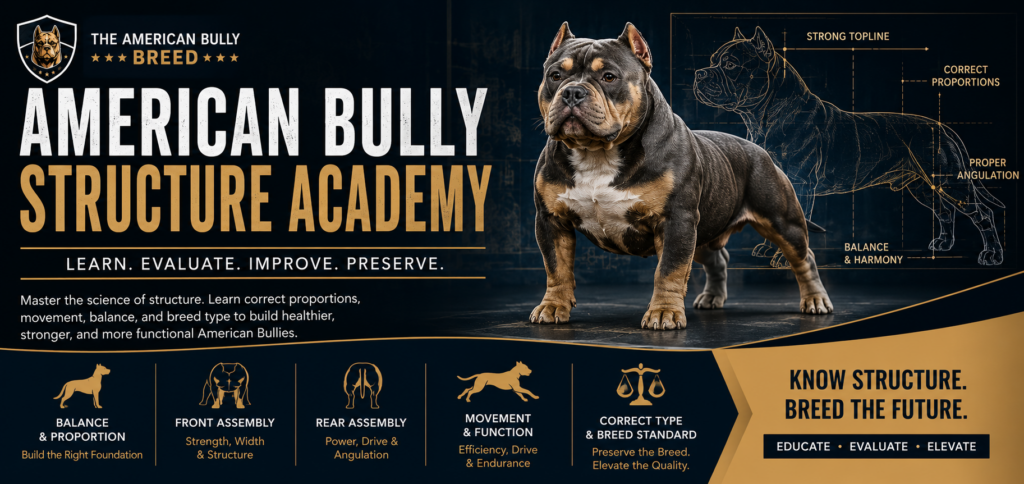
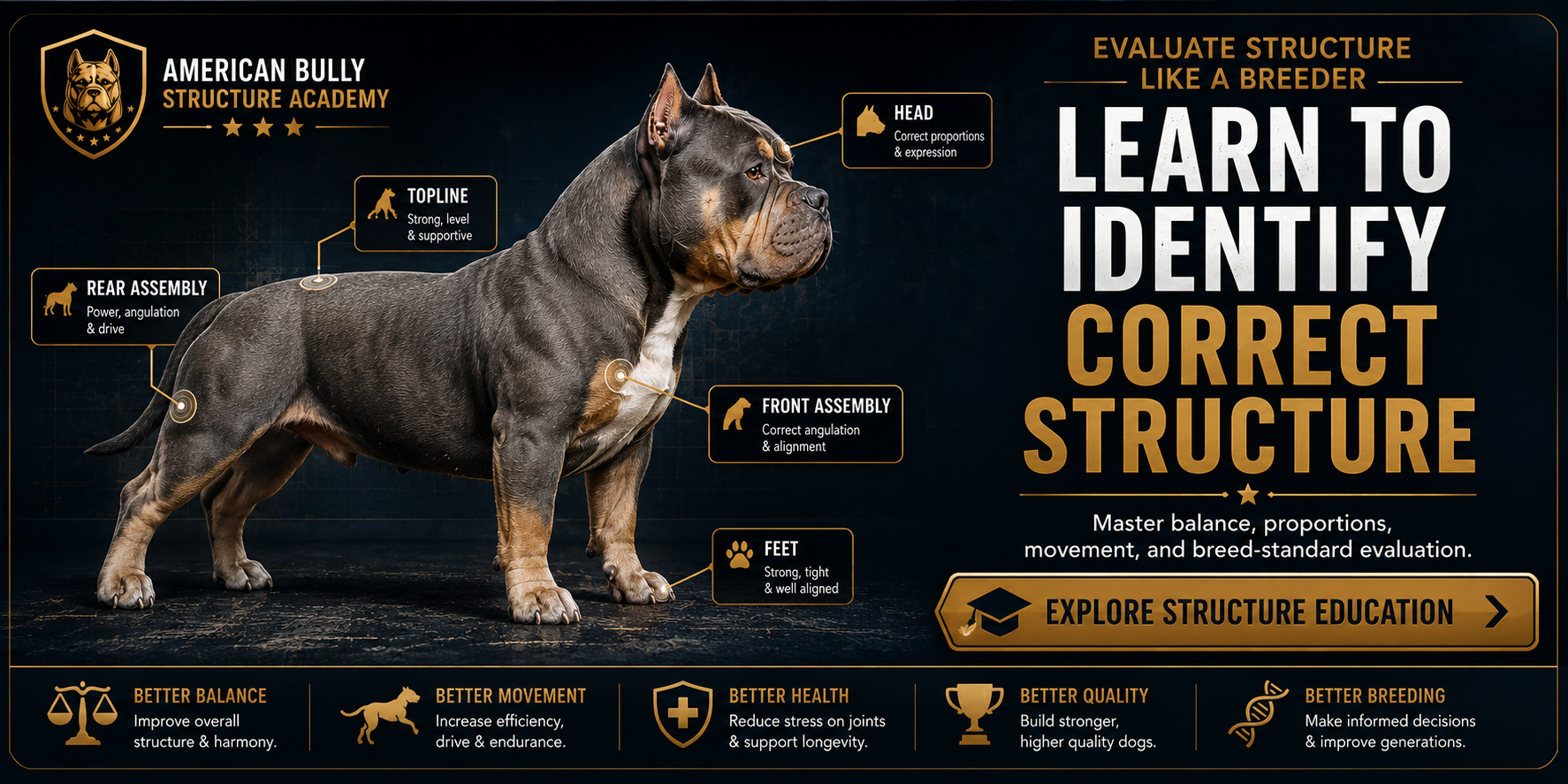
American Bully Structure Academy
Master balance, proportions, movement, and structural evaluation.
Evaluate Movement, Not Just Stacking
A stacked photo only tells part of the story.
Movement often reveals structural strengths and weaknesses.
When evaluating movement, look for:
Efficient Reach
Front legs should move freely.
Rear Drive
The rear should provide power without excessive effort.
Topline Stability
The topline should remain stable during movement.
Coordination
Movement should appear smooth, effortless, and balanced.
Many structural issues become obvious only when the dog is moving.
Movement should always support the function and purpose of the breed.
Common Structural Faults
While no dog is perfect, breeders should recognize common faults.
Examples include:
- Weak toplines
- Poor front assembly
- East-west feet
- Excessively straight rears
- Severe cow hocks
- Poor balance
- Excessive exaggeration
- Weak pasterns
Understanding faults helps breeders make informed decisions for future generations.
Responsible breeding requires recognizing both strengths and weaknesses.
To learn more about ethical breeding decisions, read Responsible American Bully Breeding Practices.
Structure Evaluation Checklist
Before selecting breeding stock, ask:
✓ Is the dog balanced?
✓ Does the dog move efficiently?
✓ Is the topline strong?
✓ Are the front and rear assemblies functional?
✓ Are the feet strong?
✓ Does the dog meet breed standards?
✓ Does structure support long-term soundness?
If the dog will be incorporated into a breeding program, also consider:
✓ Health testing
✓ Temperament
✓ Genetic diversity
✓ Pedigree strengths
For additional breeder education, explore:
- Health Testing for American Bullies
- Building an American Bully Breeding Program
- American Bully Genetics Explained
Structure Should Always Come Before Trends
Color trends come and go.
Structure lasts generations.
Responsible breeders prioritize:
- Health
- Structure
- Temperament
- Breed Type
- Color
Breeders who consistently select for sound structure contribute positively to the future of the American Bully breed.
This philosophy forms the foundation of every successful breeding program.
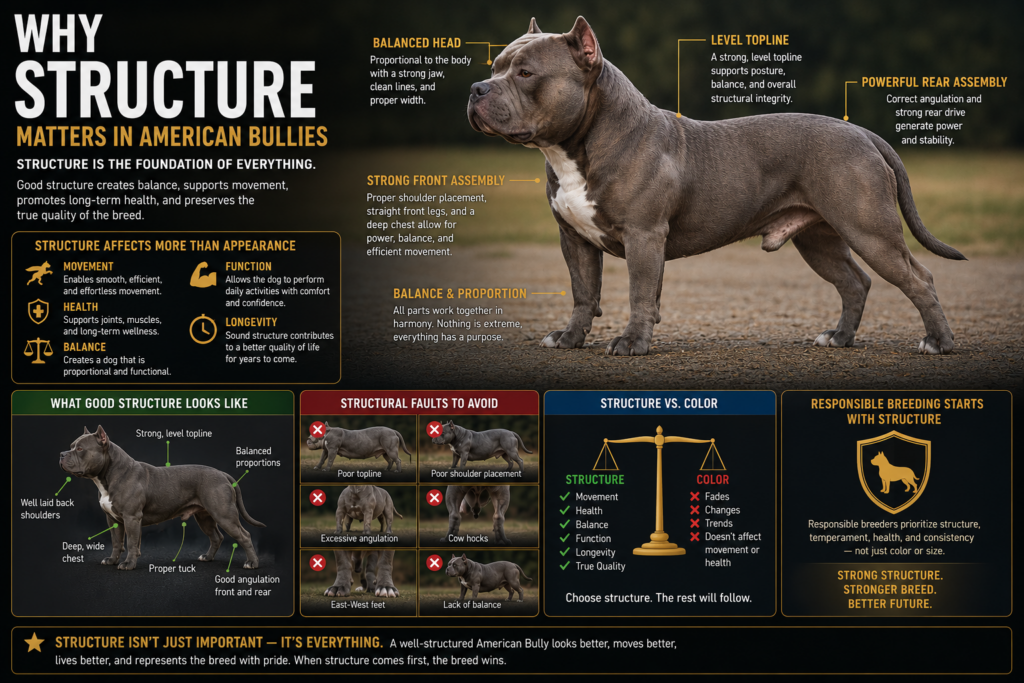
Why Structure Matters in American Bullies
Understand how structure affects health, movement, longevity, and breed quality.
Looking for an American Bully With Correct Structure?
At Capcity Bullys, we prioritize health, structure, temperament, and breed type in every breeding decision. Our goal is to produce functional, well-balanced American Bullies that meet breed standards while preserving long-term health and soundness.
Whether you’re searching for your next companion or a future breeding prospect, choosing a puppy from a program that values structure can make a significant difference.
Correct Structure Starts With Responsible Breeding

Explore available American Bully puppies raised with a focus on health, structure, temperament, and breed quality.
Final Thoughts
Learning to identify correct structure is one of the most valuable skills a breeder can develop.
Structure influences movement, health, longevity, breeding success, and overall breed quality.
The best breeders never stop studying dogs.
They continually evaluate, learn, and refine their understanding of structure.
Knowledge creates better evaluations.
Better evaluations create better breeding decisions.
Better breeding decisions create better generations.
Continue Your Education
Continue your learning journey inside the American Bully Structure Academy and the American Bully Breeder Academy.
Recommended Reading
- American Bully Structure Academy
- Why Structure Matters in American Bullies
- American Bully Genetics Explained
- American Bully Bloodlines Explained
- How to Select Breeding Stock
- Responsible American Bully Breeding Practices
- Health Testing for American Bullies
- Building an American Bully Breeding Program
Footer Navigation
← Previous Article:
Why Structure Matters in American Bullies
↑ Parent Academy:
American Bully Structure Academy
→ Next Article:


