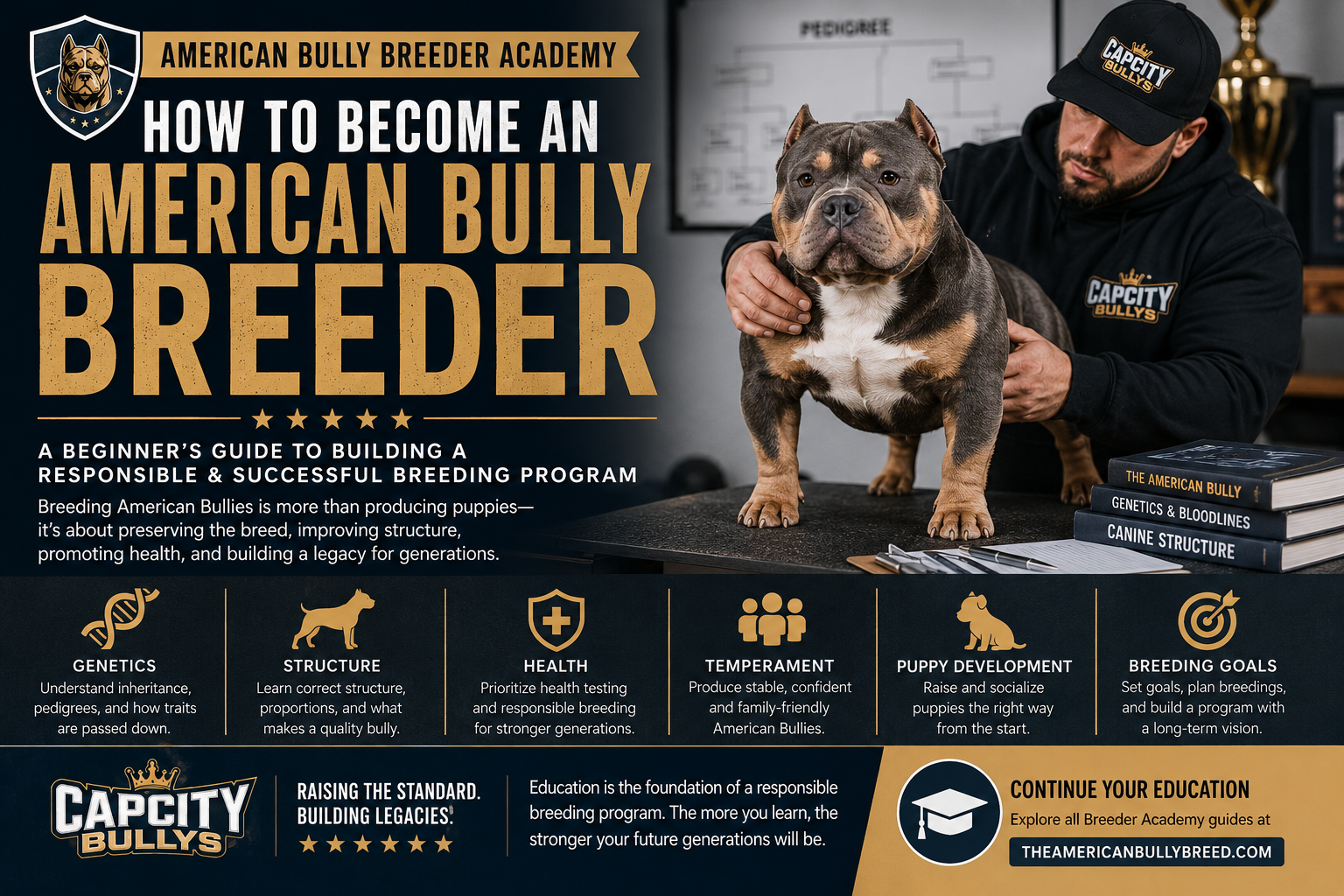
The American Bully breed continues to grow in popularity, attracting enthusiasts who admire the breed’s unique appearance, loyal temperament, and diverse bloodlines. As a result, many owners eventually ask the same question:
“How do I become an American Bully breeder?”
While breeding may seem as simple as pairing two dogs together, responsible breeding involves much more. Successful breeders invest years studying structure, genetics, bloodlines, health, temperament, and long-term breeding goals before producing a single litter.
This guide will help new breeders understand what it takes to build a responsible American Bully breeding program and avoid many of the mistakes that beginners commonly make.
What Does an American Bully Breeder Actually Do?
Many people assume breeders simply produce puppies.
In reality, responsible breeders are responsible for preserving and improving the breed.
Their responsibilities include:
- Selecting breeding stock
- Evaluating structure
- Understanding pedigrees
- Researching bloodlines
- Planning breeding pairings
- Raising and socializing puppies
- Educating buyers
- Supporting puppy owners
- Making long-term breeding decisions
The best breeders think in generations, not individual litters.
Step 1: Learn the American Bully Breed Standard
Before breeding any dog, you should understand what the breed is supposed to look like and how it should function.
The breed standard provides a blueprint for:
- Structure
- Movement
- Proportions
- Temperament
- Breed type
Without understanding the standard, it becomes impossible to evaluate quality breeding st
tock.
Continue Learning
→ American Bully Structure Academy
→ American Bully Structure Guide: What Correct Proportions Look Like
→ Why Structure Matters in American Bullies
Step 2: Study Structure Before Bloodlines
One of the biggest mistakes new breeders make is focusing exclusively on famous bloodlines.
Bloodlines matter.
However, structure should always come first.
A well-structured dog with lesser-known bloodlines will often contribute more to a breeding program than a poorly structured dog with a famous pedigree.
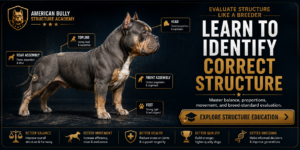
Learn how to evaluate:
- Front assembly
- Rear assembly
- Topline
- Angulation
- Balance
- Movement
- Proportions
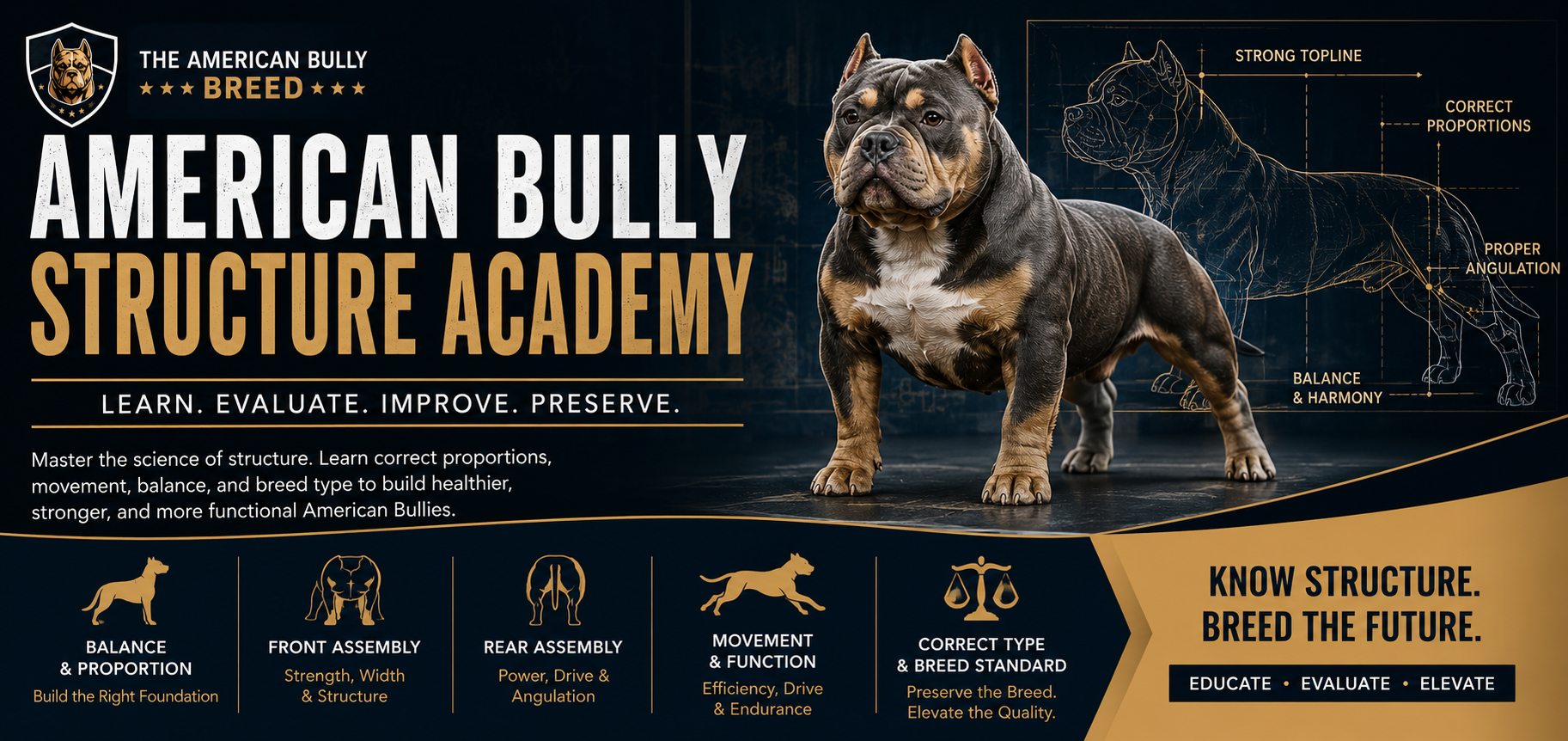
Master structure, movement, balance, and breed type.
Continue Learning
→ Good Structure vs Bad Structure in Micro Bullies
→ Evaluating Front Assemblies (Coming Soon)
→ Evaluating Rear Assemblies (Coming Soon)
Step 3: Understand Genetics and Bloodlines
Genetics influence nearly every aspect of the breed.
This includes:
- Size
- Structure
- Color
- Temperament
- Health
- Consistency
Successful breeders understand how traits are inherited and how pedigrees influence future generations.
Many beginners make breeding decisions based solely on appearance while ignoring genetic compatibility.

Learn bloodlines, pedigrees, inheritance, and breeding strategy.
Continue Learning
→ American Bully Bloodlines Explained
→ The Role of Genetics in American Bullies
→ American Bully Genetics Explained
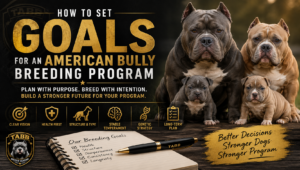
Step 4: Define Your Breeding Goals
Before purchasing breeding stock, ask yourself:
“What am I trying to produce?”
Examples include:
- Better structure
- Improved movement
- Consistent temperament
- More athletic dogs
- Healthier dogs
- Specific size goals
- Better breed type
Breeders without a clear vision often produce inconsistent results.
Every breeding decision should support a long-term goal.
Step 5: Invest in Quality Breeding Stock
The quality of your program will never exceed the quality of your foundation dogs.
When selecting breeding stock, evaluate:
Structure
Sound, balanced, functional dogs.
Temperament
Stable, confident, family-friendly personalities.
Health
Dogs with strong overall health and longevity.
Pedigree
Dogs from proven bloodlines that complement your goals.
The best breeders are often extremely selective about which dogs they add to their programs.
Continue Learning
→ How to Select Breeding Stock
→ Evaluating Stud Dogs (Coming Soon)
→ Evaluating Females (Coming Soon)
Step 6: Learn Responsible Breeding Practices
Producing puppies should never be the primary goal.
Improving the breed should be.
Responsible breeding includes:
- Careful pairing selection
- Proper puppy socialization
- Honest buyer education
- Lifetime responsibility for puppies produced
- Prioritizing health and temperament
Every breeding decision should be made with the long-term welfare of the dogs in mind.
Continue Learning
→ Responsible American Bully Breeding Practices
Step 7: Learn Puppy Development and Socialization
A breeder’s work continues long after puppies are born.
The first eight weeks play a major role in shaping:
- Confidence
- Temperament
- Social skills
- Adaptability
Responsible breeders invest significant time in socialization and development programs.
Continue Learning
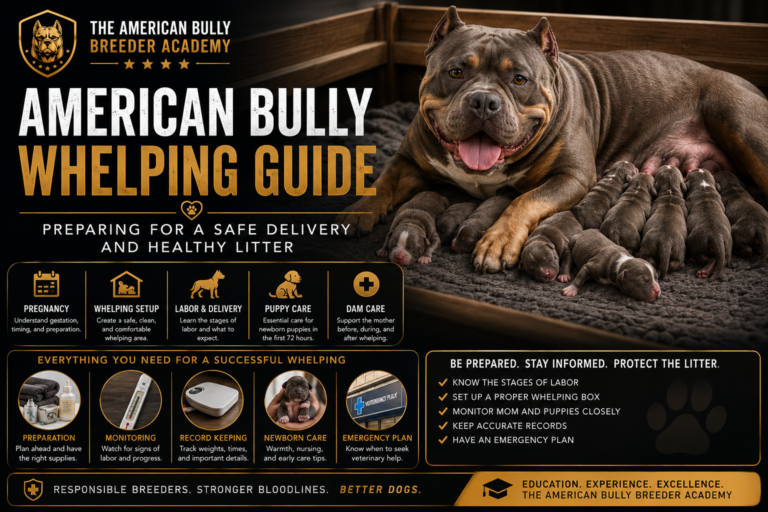
→ American Bully Whelping Guide
→ Puppy Development Week by Week
→ Early Neurological Stimulation
Step 8: Build a Program, Not Just Litters
Many new breeders focus on producing individual litters.
Experienced breeders focus on building programs.
A breeding program requires:
- Long-term planning
- Consistency
- Evaluation
- Record keeping
- Continuous improvement
The best programs are built over years—not months.
Continue Learning
→ Building an American Bully Breeding Program
→ Building Consistency Through Generations
→ Multi-Generation Breeding Plans
Common Beginner Breeder Mistakes
Avoid these common mistakes:
Breeding Too Soon
Take time to learn before producing your first litter.
Prioritizing Color Over Quality
Structure and temperament should always come first.
Chasing Trends
Breed standards outlast trends.
Ignoring Genetics
Every breeding decision should consider genetic compatibility.
Breeding Without a Goal
Successful programs are built around clear objectives.
Can You Make Money Breeding American Bullies?
Many people enter breeding because they believe it is an easy business.
In reality, responsible breeding requires significant investments in:
- Dogs
- Veterinary care
- Food
- Housing
- Training
- Socialization
- Marketing
- Education
The most successful breeders are typically driven by passion for the breed rather than short-term profits.
Final Thoughts
Becoming an American Bully breeder is about much more than producing puppies.
The best breeders become lifelong students of structure, genetics, bloodlines, temperament, and responsible breeding practices.
If you’re serious about becoming a breeder, focus on education first.
The stronger your knowledge foundation becomes, the stronger your breeding program will be in the future
Explore the American Bully Breeder Academy
Ready to continue learning?
Start Here
→ Responsible American Bully Breeding Practices
→ American Bully Genetics Explained
→ American Bully Bloodlines Explained
→ American Bully Structure Academy
→ Health Testing for American Bullies
Real-World Breeding Program Example
Interested in seeing how breeding principles are applied in a real program?
Visit Capcity Bullys to learn about breeding philosophy, structure evaluation, puppy development, and responsible breeding practices.

Explore Capcity Bullys
See how breeding principles are applied in a real-world American Bully breeding program.
Breeder Academy Navigation
Previous: American Bully Breeder Academy Home
Next: Responsible American Bully Breeding Practices
Genetics Path
→ American Bully Genetics Explained
→ American Bully Bloodlines Explained
Structure Path
→ American Bully Structure Academy
→ Correct Proportions Explained
Program Development Path
→ Building an American Bully Breeding Program
→ How to Select Breeding Stock
→ American Bully Whelping Guide
FAQ Schema Questions
How do I become an American Bully breeder?
Start by learning the breed standard, structure, genetics, bloodlines, and responsible breeding practices before purchasing breeding stock.
Do I need experience before breeding American Bullies?
Yes. Responsible breeders spend significant time learning about structure, pedigrees, health, temperament, and puppy development before producing a litter.
What is the most important thing for a new breeder to learn?
Structure and genetics are two of the most important foundations for building a successful breeding program.
How much does it cost to start an American Bully breeding program?
Costs vary widely depending on breeding stock, veterinary care, facilities, health testing, and program goals.
Should I breed for color or structure?
Structure, health, and temperament should always take priority over color.