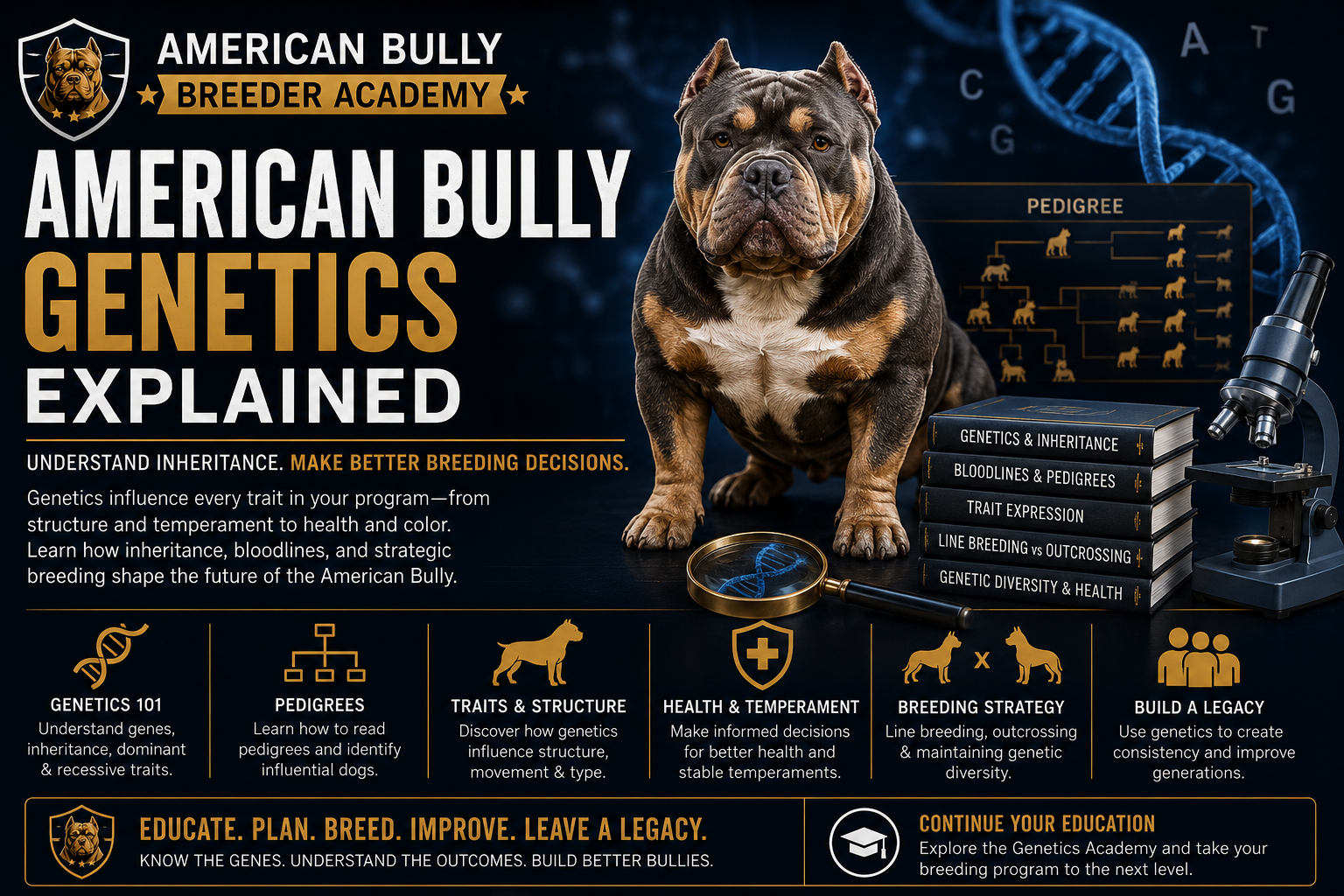
Genetics is one of the most important subjects every American Bully breeder must understand.
Every trait a breeder hopes to produce—or avoid—is influenced by genetics. Structure, size, temperament, color, health, movement, and overall breed consistency are all shaped by the genes passed from one generation to the next.
Unfortunately, many breeders focus solely on appearance while overlooking the genetic principles that determine long-term success.
The most successful breeding programs are built on a strong understanding of inheritance, bloodlines, pedigree analysis, and strategic breeding decisions.
This guide explains the fundamentals of American Bully genetics and how responsible breeders use genetic knowledge to build healthier, more consistent dogs.
Why Genetics Matter in American Bullies
Every dog inherits genetic material from both parents.
Those genes influence:
- Structure
- Size
- Bone density
- Head type
- Temperament
- Movement
- Health
- Coat color
- Overall breed consistency
While environment and training play important roles, genetics provide the blueprint that shapes each dog.
Understanding genetics allows breeders to make informed decisions rather than relying on luck.

Learn pedigrees, bloodlines, inheritance, and breeding strategy.
What Is a Gene?
A gene is a segment of DNA that carries instructions for specific traits.
Genes influence:
- Physical characteristics
- Biological functions
- Behavioral tendencies
- Health predispositions
Every American Bully carries thousands of genes that interact to create the unique dog standing in front of you.
Some traits are strongly inherited.
Others are influenced by multiple genes working together.
How Traits Are Inherited
Every puppy receives:
- 50% of its genetic material from the sire
- 50% of its genetic material from the dam
However, inheritance is not always predictable.
Two outstanding dogs can produce average offspring.
Likewise, average dogs can occasionally produce exceptional puppies.
This is why breeders focus on consistency over individual dogs.
Dominant and Recessive Traits
One of the first concepts breeders encounter is dominant and recessive inheritance.
Dominant Traits
Dominant traits require only one copy of a gene to be expressed.
Recessive Traits
Recessive traits require two copies before they become visible.
Understanding dominant and recessive inheritance becomes especially important when discussing:
- Coat colors
- Markings
- Certain genetic conditions
Many breeding surprises occur because recessive traits can remain hidden for generations.
Polygenic Traits
Most important American Bully traits are not controlled by a single gene.
They are polygenic.
Polygenic traits include:
- Structure
- Bone
- Head shape
- Chest width
- Movement
- Muscle development
- Overall balance
This is why breeding is rarely simple.
Improving structure often requires multiple generations of selective breeding.
Genetics and Structure
Structure is one of the most heritable traits breeders evaluate.
Genetics influence:
- Shoulder placement
- Rear angulation
- Topline
- Bone density
- Balance
- Proportions
- Movement
Well-structured parents are generally more likely to produce well-structured offspring.
However, no breeding is guaranteed.
This is why breeders evaluate entire pedigrees rather than focusing only on individual dogs.
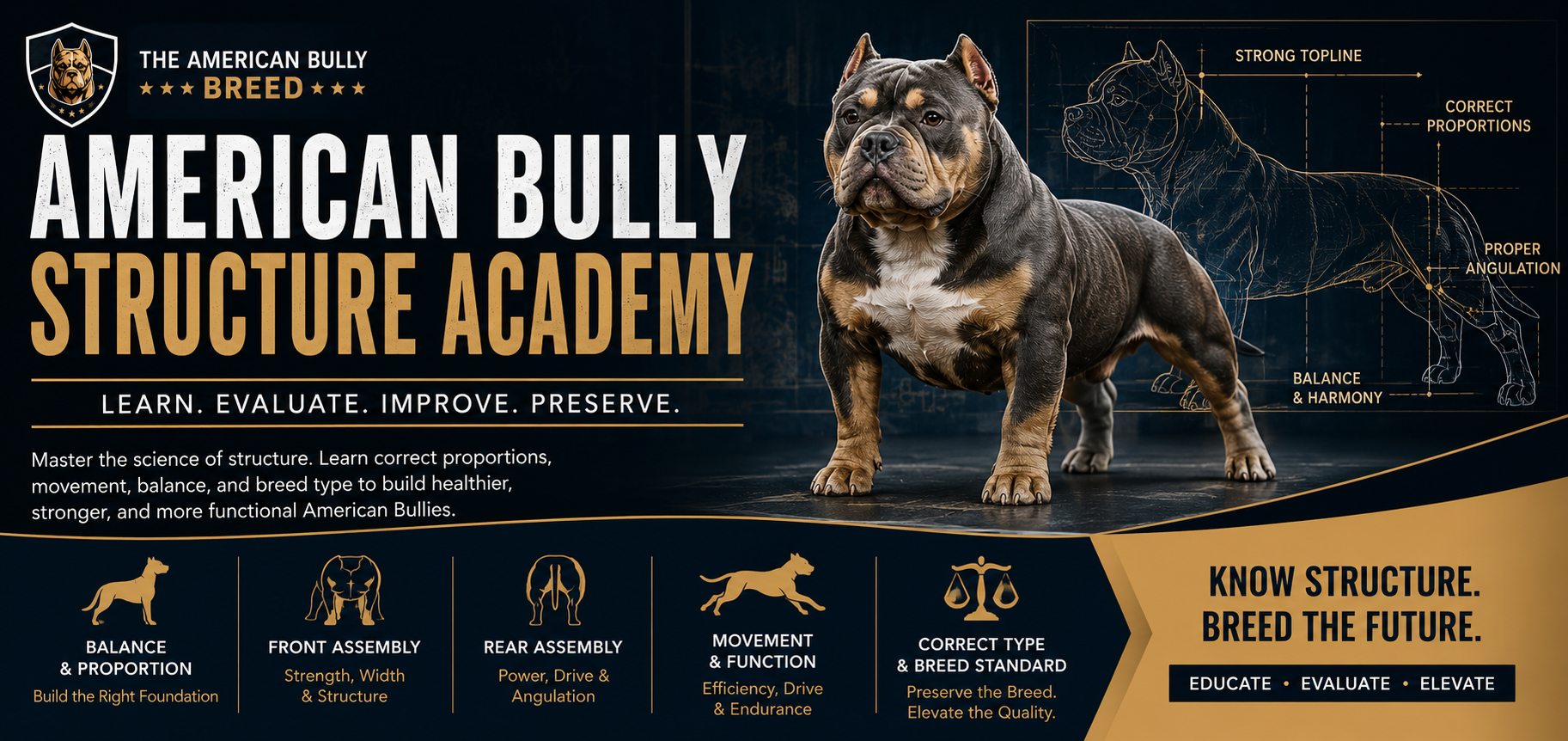
Master balance, proportions, movement, and structural evaluation.
Continue Learning
→ American Bully Structure Academy
→ Why Structure Matters in American Bullies
→ American Bully Structure Guide: What Correct Proportions Look Like
Genetics and Temperament
Temperament has both genetic and environmental influences.
Responsible breeders select for:
- Confidence
- Stability
- Trainability
- Social behavior
- Family-friendly temperaments
Dogs with poor temperament should not contribute to future generations.
Breeding stable dogs helps preserve the breed’s reputation and improves the quality of future litters.
Continue Learning
→ American Bully Temperament: Myth vs Reality
→ Breeding for Temperament (Coming Soon)
Bloodlines and Genetics
Bloodlines represent generations of inherited genetics.
When breeders discuss bloodlines, they are really discussing:
- Predictability
- Consistency
- Trait concentration
- Genetic influence
Well-established bloodlines often become known for specific characteristics.
Examples might include:
- Structure
- Bone
- Head type
- Movement
- Temperament
Understanding bloodlines helps breeders predict potential outcomes more accurately.
Continue Learning
→ American Bully Bloodlines Explained
→ Understanding Micro Bully Bloodlines
Understanding Pedigrees
A pedigree is a genetic roadmap.
It allows breeders to evaluate:
- Ancestors
- Influential dogs
- Genetic concentration
- Potential strengths
- Potential weaknesses
The best breeders study multiple generations before making breeding decisions.
Pedigrees reveal much more than names.
They reveal patterns.
Continue Learning
Line Breeding vs Outcrossing
Two common breeding strategies are:
Line Breeding
Breeding related dogs to strengthen specific traits.
Potential benefits:
- Consistency
- Predictability
- Trait concentration
Potential risks:
- Increased genetic weaknesses
- Reduced diversity
Outcrossing
Breeding unrelated lines together.
Potential benefits:
- Increased diversity
- New strengths
- Hybrid vigor
Potential risks:
- Less predictability
- Greater variation
Both approaches have advantages and disadvantages.
Successful breeders understand when each strategy may be appropriate.
Continue Learning
→ Line Breeding vs Outcrossing
Genetic Diversity Matters
One of the biggest mistakes breeders make is focusing only on famous dogs while ignoring genetic diversity.
Healthy breeding programs balance:
- Consistency
- Improvement
- Diversity
Maintaining genetic diversity helps reduce the risk of concentrating undesirable traits over time.
Continue Learning
→ Genetic Diversity in American Bully Breeding Programs (Coming Soon)
Color Genetics vs Functional Genetics
Many new breeders become obsessed with color.
While color genetics can be interesting, responsible breeders understand that color alone does not improve the breed.
Health, temperament, movement, and structure should always take priority over coat color.
The best breeding decisions focus on the whole dog.
Common Genetic Mistakes New Breeders Make
Chasing Color
Color should never outweigh quality.
Ignoring Structure
Structure remains one of the most important inherited traits.
Focusing on One Famous Dog
Evaluate entire pedigrees, not just individual names.
Breeding Without Understanding Genetics
Every breeding decision has long-term consequences.
Prioritizing Trends Over Improvement
Successful breeders think in generations.
Genetics and Building a Breeding Program
The strongest breeding programs use genetics strategically.
Breeders should continually ask:
- What traits am I improving?
- What weaknesses am I correcting?
- What strengths am I preserving?
- What does this pedigree contribute?
Genetics should guide every breeding decision.
Final Thoughts
American Bully genetics is far more complex than color, pedigrees, or famous bloodlines.
Successful breeders understand how inheritance influences structure, temperament, health, and consistency over multiple generations.
The more a breeder understands genetics, the better equipped they become to make informed breeding decisions that improve the breed.
Responsible breeding begins with education—and genetics is one of the most important subjects a breeder can study.
Continue Your Genetics Education
Next Articles
→ American Bully Bloodlines Explained
→ Line Breeding vs Outcrossing
→ Genetic Diversity in Breeding Programs
→ Color Genetics Explained (Coming Soon)
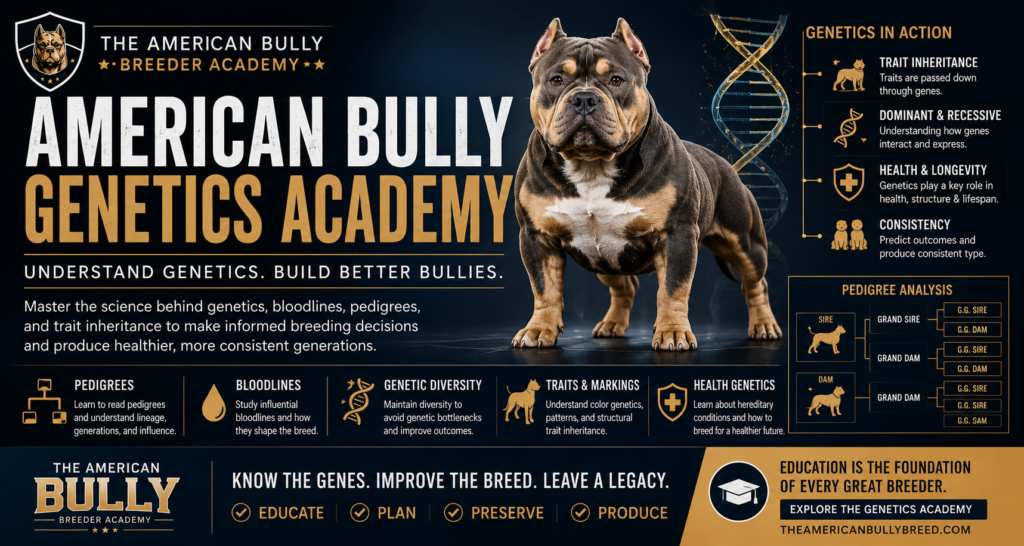
Explore the Genetics Academy
Continue learning about:
- Bloodlines
- Pedigrees
- Inheritance
- Genetic Diversity
- Breeding Strategy
[American Bully Genetics Academy]

Explore Capcity Bullys
See how genetics, structure, temperament, and breeding goals come together in a real-world breeding program.
Breeder Academy Navigation
Previous: Responsible American Bully Breeding Practices
Next: American Bully Bloodlines Explained
Related Pillars
→ How to Become an American Bully Breeder
→ American Bully Structure Academy
→ How to Select Breeding Stock
→ Building an American Bully Breeding Program
FAQ Questions
What are American Bully genetics?
American Bully genetics refers to the inherited traits that influence structure, temperament, size, health, movement, and overall breed consistency.
Why are genetics important in breeding?
Genetics determine which traits are passed from parents to offspring and help breeders make informed breeding decisions.
What is the difference between bloodlines and genetics?
Genetics refers to inherited traits, while bloodlines represent generations of dogs that carry and pass those traits.
What are dominant and recessive traits?
Dominant traits require only one copy of a gene to be expressed, while recessive traits require two copies.
Why should breeders study pedigrees?
Pedigrees help breeders understand ancestry, predict outcomes, identify strengths and weaknesses, and make strategic breeding decisions.