
When discussing American Bullies, few topics are more important than structure.
Unfortunately, many newcomers focus primarily on color, size, muscle, or head size while overlooking the foundation that determines a dog’s overall quality: correct structure.
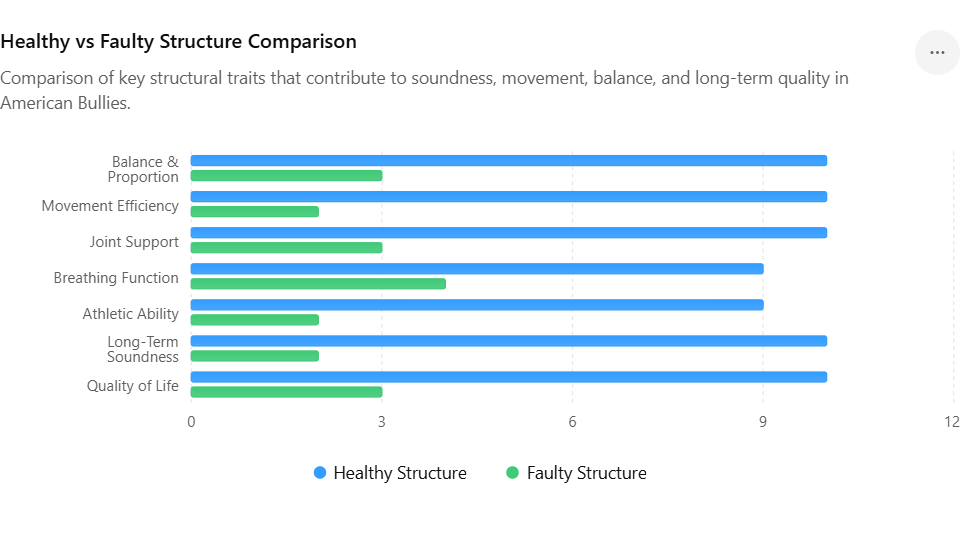
Structure affects everything from appearance and movement to comfort, functionality, and long-term soundness. A well-structured American Bully not only looks impressive but also moves efficiently and maintains balance throughout its life.
In this American Bully structure guide, we’ll break down the key elements of proper structure, explain what correct proportions look like, and help owners better evaluate American Bullies beyond appearance alone.
What Is Structure?
Structure refers to the physical framework of a dog.
This includes:
✔️ Bone
✔️ Proportions
✔️ Angulation
✔️ Topline
✔️ Chest development
✔️ Shoulder placement
✔️ Rear assembly
✔️ Overall balance
Structure determines how all parts of the dog work together.
A properly structured American Bully should appear balanced, athletic, and functional regardless of size class.
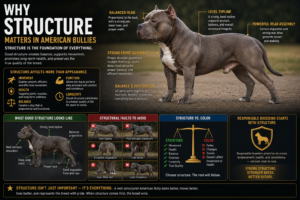
Why Structure Matters
Many breeders and enthusiasts consider structure the single most important trait in the breed.
Correct structure contributes to:
- Better movement
- Improved balance
- Long-term comfort
- Functional athleticism
- Overall breed quality
Dogs with poor structure may experience reduced mobility, inefficient movement, and increased stress on joints over time.
For a deeper understanding of why structure should be prioritized:
➡ Why Structure Matters in American Bullies
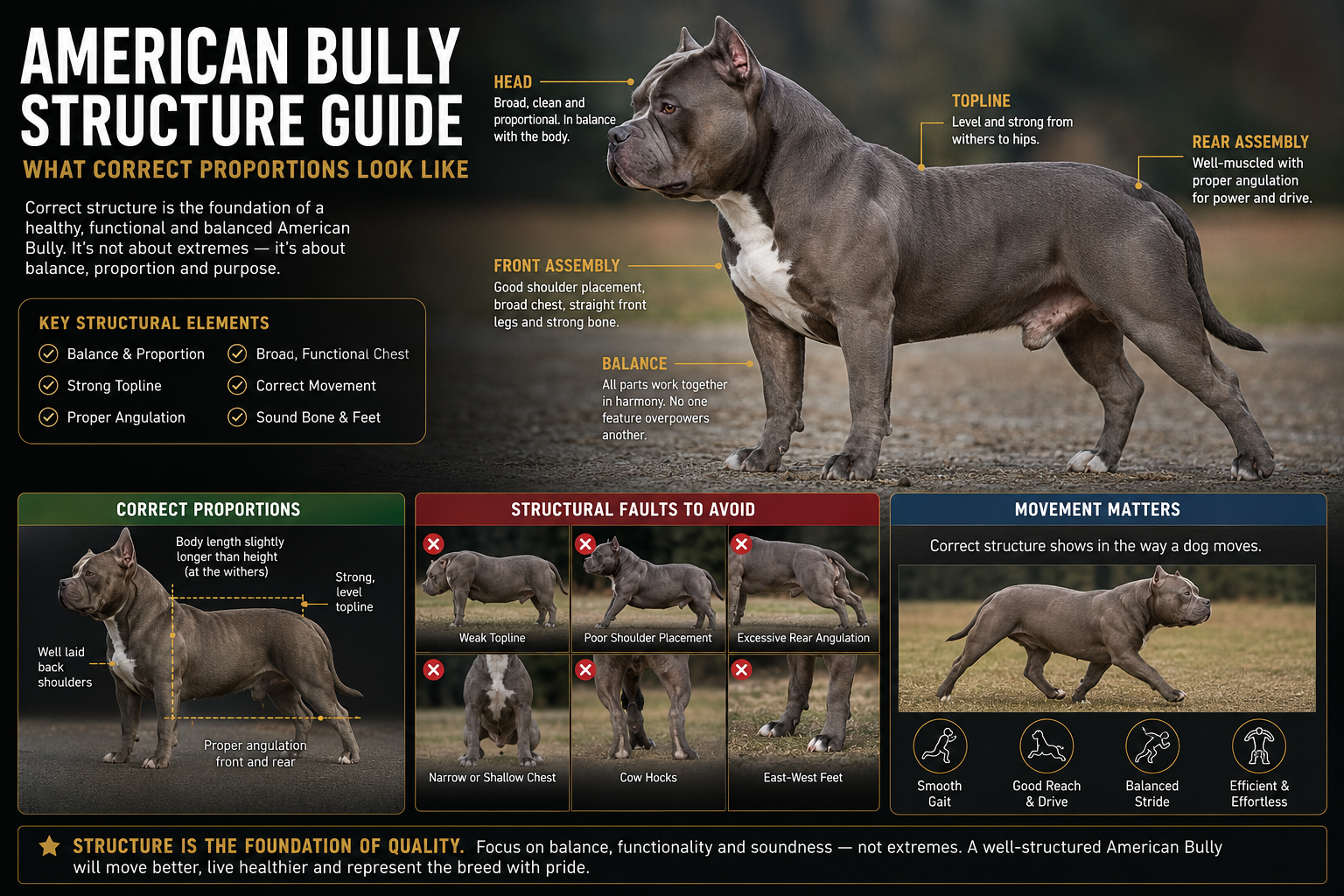
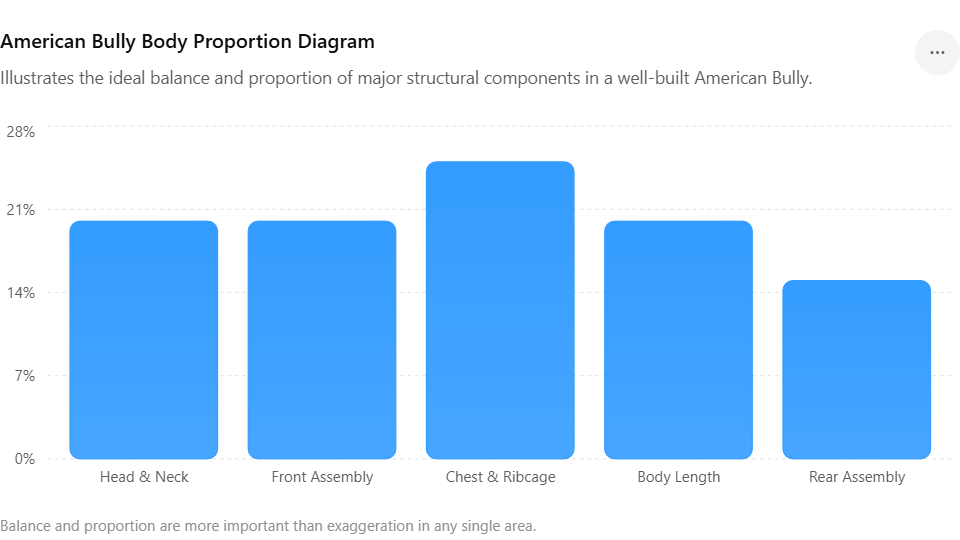
Balance Is Everything
One of the easiest ways to evaluate structure is by looking at balance.
A balanced American Bully should not appear exaggerated in one area while lacking in another.
Examples of balance include:
✔️ Head proportional to body
✔️ Chest proportional to frame
✔️ Bone proportional to size
✔️ Front and rear assembly working together
✔️ Smooth overall appearance
When viewed from the side, no single feature should overpower the rest of the dog.
Correct Head Proportions
The American Bully is known for its impressive head type.
However, bigger is not always better.
A correct head should be:
✔️ Broad
✔️ Clean
✔️ Proportional
✔️ Balanced with the body
Extremely oversized heads can create an unbalanced appearance and may detract from overall structure.
The goal is harmony, not exaggeration.
The Importance of a Strong Topline
The topline refers to the dog’s back from the shoulders to the hips.
A correct American Bully should display:
✔️ A level topline
✔️ Strength through the back
✔️ Smooth transitions
✔️ Proper posture
An excessively roached, dipped, or uneven topline can negatively impact both appearance and movement.
Chest and Front Assembly
The American Bully is known for a broad chest, but width alone does not define quality.
A proper front assembly should include:
✔️ Broad chest
✔️ Good shoulder placement
✔️ Straight front legs
✔️ Strong feet
✔️ Proper spacing
Many inexperienced owners confuse extreme width with correct structure.
The best dogs combine width with balance and functionality.
Rear Structure and Angulation
The rear assembly generates power and movement.
Correct rear structure should include:
✔️ Well-developed muscle
✔️ Proper angulation
✔️ Balanced proportions
✔️ Strong hocks
✔️ Stable movement
The front and rear should complement one another rather than appear disconnected.
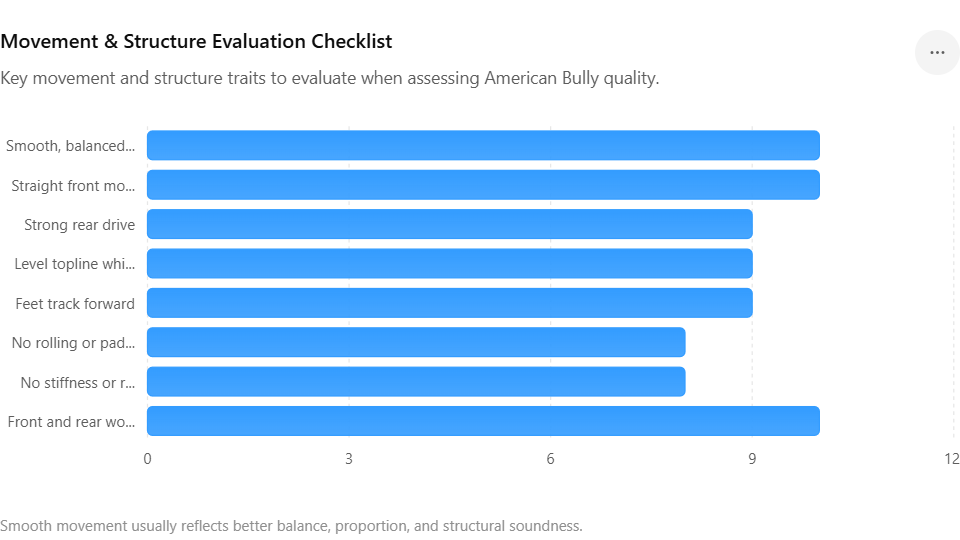
Movement Reveals Structure
One of the fastest ways to evaluate structure is to watch the dog move.
Proper movement often indicates proper construction.
Look for:
✔️ Smooth gait
✔️ Balanced stride
✔️ Good reach
✔️ Proper drive
✔️ Stability
Many structural weaknesses become more obvious when a dog is moving than when standing still.
Structure Across Different Size Classes
Structure matters whether the dog is:
- Micro
- Standard
- XL
A well-structured dog should remain balanced regardless of size.
Quality should never be judged solely by height.
American Bully Structure Evaluation Chart
| Structural Area | What to Look For | Signs of Correct Structure | Warning Signs |
|---|---|---|---|
| Head | Proportionate to body | Large, balanced, clean features | Oversized head causing imbalance |
| Neck | Muscular and clean | Smooth transition into shoulders | Short, thick, restricted neck |
| Shoulders | Well-laid back | Allows efficient movement | Upright shoulders |
| Chest | Broad with depth | Adequate heart and lung room | Excessively wide or shallow chest |
| Front Legs | Straight and strong | Support weight evenly | Bowed or east-west feet |
| Topline | Level from shoulder to hip | Stable and balanced appearance | Roached, dipped, or uneven back |
| Body Length | Slightly longer than tall | Balanced proportions | Too long or excessively short |
| Rear Assembly | Strong and muscular | Proper drive and power | Weak rear or poor angulation |
| Feet | Tight and compact | Strong support and stability | Splayed or weak feet |
| Movement | Smooth and balanced | Efficient, athletic gait | Rolling, paddling, or restricted movement |
| Overall Balance | Proportional build | All parts work together | Exaggerated features dominate structure |
Structure Evaluation Score
✅ Excellent Structure: 9–11 areas meet breed standards
✅ Good Structure: 7–8 areas meet breed standards
⚠️ Fair Structure: 5–6 areas meet breed standards
❌ Poor Structure: Fewer than 5 areas meet breed standards
Remember: The best American Bullies are judged by balance, proportion, movement, and functionality—not by one exaggerated feature.
For more information:
➡ American Bully Size Guide: Micro, Pocket, Standard & XL
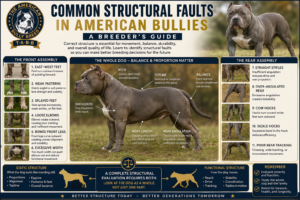
Common Structural Faults
While no dog is perfect, responsible breeders work to minimize structural weaknesses.
Some common faults include:
❌ Weak toplines
❌ Poor shoulder placement
❌ Excessive rear angulation
❌ Cow hocks
❌ East-west feet
❌ Poor balance
❌ Excessive exaggeration
These issues can affect both appearance and functionality.
Structure vs Color
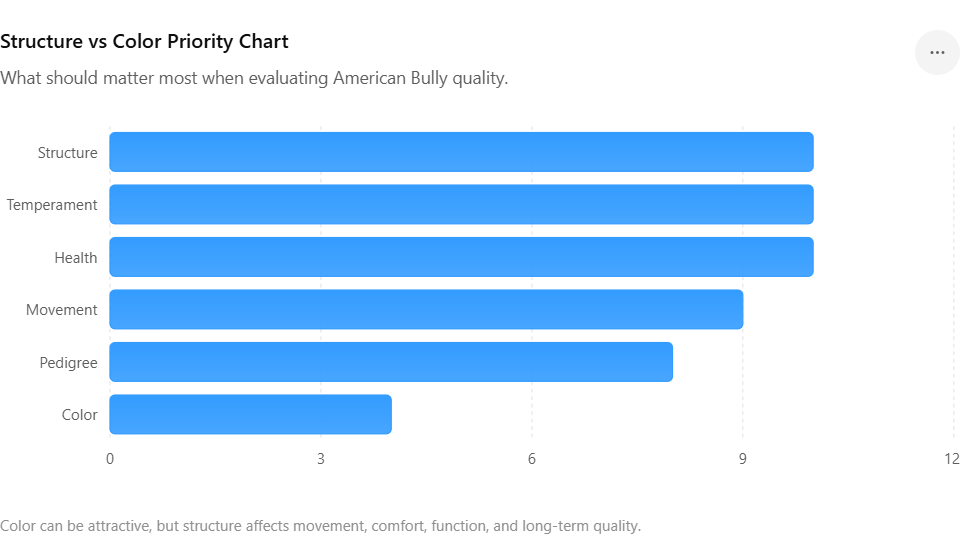
One of the biggest mistakes buyers make is prioritizing color over structure.
Color may attract attention initially, but structure impacts the dog’s quality for life.
When evaluating a puppy or adult dog, prioritize:
- Structure
- Temperament
- Health
- Pedigree
- Color
Never the other way around.
Genetics and Structure
Structure is heavily influenced by genetics.
Responsible breeders study pedigrees and bloodlines to improve consistency across generations.
For more information:
➡ American Bully Bloodlines Explained
➡ How Genetics Influence Structure in American Bullies
What Buyers Should Look For
If you’re evaluating an American Bully, look for:
✔️ Overall balance
✔️ Correct proportions
✔️ Strong topline
✔️ Proper movement
✔️ Sound feet and legs
✔️ Broad but functional chest
✔️ Clean structure
Most importantly, avoid becoming distracted by trends or exaggerated features.
The best dogs combine appearance, functionality, and long-term soundness.
Structure Is the Foundation of Responsible Breeding
Responsible breeders understand that structure forms the foundation of every successful breeding program.
The goal is not simply producing larger heads, shorter bodies, or more extreme features.
The goal is producing dogs that are:
✔️ Balanced
✔️ Functional
✔️ Healthy
✔️ Consistent
✔️ Representative of the breed
For more information:
➡ Responsible Breeding Practices for American Bullies
➡ About Our Breeding Philosophy
Final Thoughts
Correct structure is one of the most important indicators of quality in the American Bully breed.
While color, size, and muscle may attract attention, structure determines how well a dog moves, functions, and represents the breed over time.
When evaluating an American Bully, always prioritize:
✔️ Balance
✔️ Proportions
✔️ Movement
✔️ Functionality
✔️ Soundness
Because regardless of size class, bloodline, or color, proper structure remains the foundation of a quality American Bully.
Continue Learning
➡ Why Structure Matters in American Bullies
➡ American Bully Bloodlines Explained
➡ How Genetics Influence Structure in American Bullies
➡ Responsible Breeding Practices for American Bullies
➡ American Bully Size Guide: Micro, Pocket, Standard & XL
➡ About Our Breeding Philosophy