
The American Bully breed has grown tremendously in popularity over the last two decades. Along with that growth comes an increased responsibility for breeders to prioritize health, temperament, structure, and long-term breed improvement.
Unfortunately, many people enter breeding with little understanding of genetics, structure, puppy development, or ethical breeding practices. Responsible breeding involves far more than producing puppies. It requires education, planning, accountability, and a commitment to improving the breed generation after generation.
This guide explains the principles of responsible American Bully breeding and how breeders can contribute positively to the future of the breed.
What Is Responsible Breeding?
Responsible breeding means making breeding decisions that prioritize:
- Health
- Structure
- Temperament
- Functionality
- Breed preservation
- Long-term improvement
The goal is not simply to create puppies.
The goal is to produce healthier, more consistent dogs that represent the breed well.
Responsible breeders view every breeding as an opportunity to improve upon the previous generation.
Responsible Breeding Starts With Education
Before producing a litter, breeders should invest significant time learning about:
- Breed standards
- Structure
- Genetics
- Bloodlines
- Puppy development
- Health considerations
- Temperament evaluation
Education helps breeders make informed decisions and avoid common mistakes.

American Bully Breeder Academy
Master structure, genetics, bloodlines, and breeding program development.
Continue Learning
→ How to Become an American Bully Breeder
→ American Bully Structure Academy
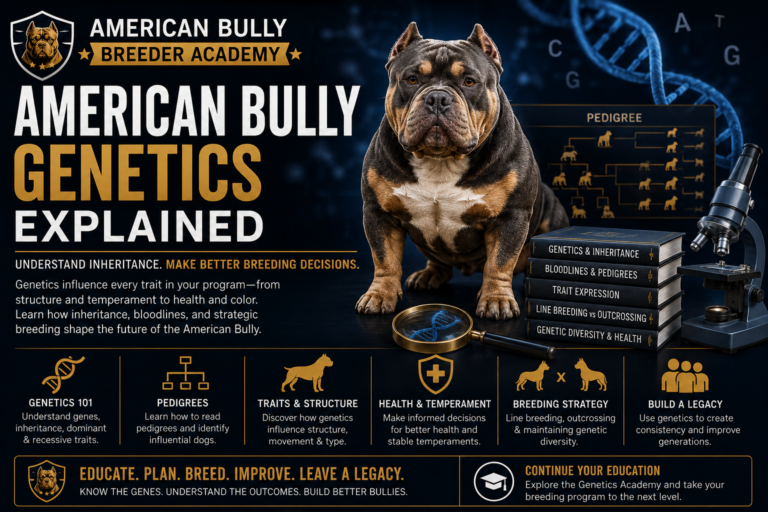
→ American Bully Genetics Academy
Prioritize Structure Over Trends
One of the most common mistakes in modern breeding is prioritizing trends over quality.
Popular colors, exaggerated features, and social media hype often attract attention, but they do not necessarily improve the breed.
Responsible breeders prioritize:
- Correct proportions
- Functional movement
- Balance
- Proper angulation
- Sound structure
A well-structured dog can often contribute more to a breeding program than a flashy dog with structural faults.
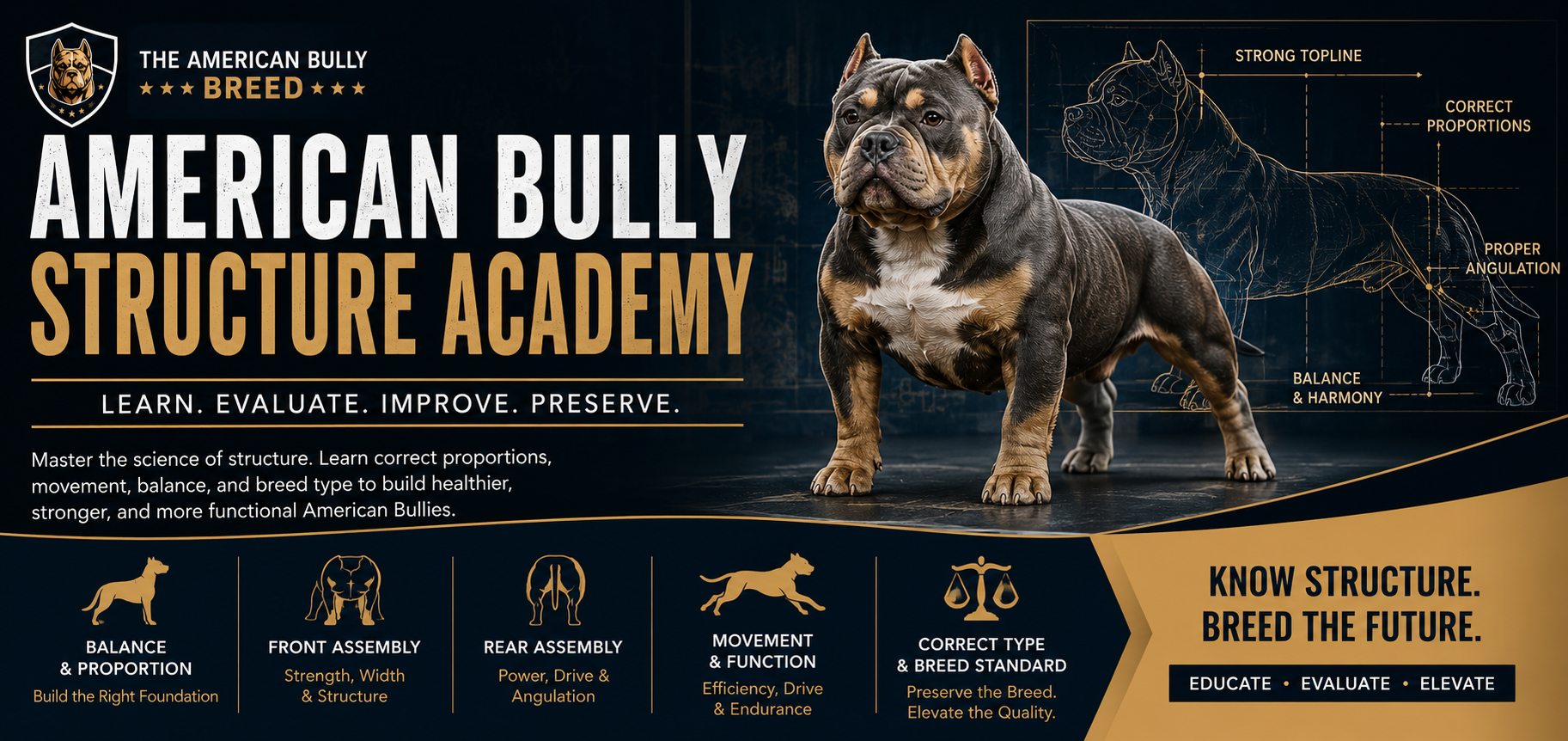
American Bully Structure Academy
Learn how to evaluate balance, movement, proportions, and breed type.
Continue Learning
→ Why Structure Matters in American Bullies
→ American Bully Structure Guide
→ Bad Structure vs Good Structure in Micro Bullies
Temperament Matters
A dog’s temperament is just as important as its appearance.
American Bullies should be:
- Stable
- Confident
- Social
- Family-oriented
- Trainable
Breeding dogs with poor temperaments can negatively impact future generations.
Responsible breeders carefully evaluate temperament before making breeding decisions.
Continue Learning
→ American Bully Temperament: Myth vs Reality
→ Breeding for Temperament (Coming Soon)
Understand Genetics Before Breeding
Every breeding decision is ultimately a genetic decision.
Responsible breeders learn how traits are inherited and how bloodlines influence:
- Structure
- Temperament
- Size
- Health
- Consistency
Understanding genetics helps breeders make informed pairing decisions rather than relying on guesswork.

American Bully Genetics Academy
Learn how pedigrees, bloodlines, and trait inheritance influence future generations.
Continue Learning
→ The Role of Genetics in American Bullies
→ American Bully Bloodlines Explained
→ American Bully Genetics Academy
Choose Breeding Stock Carefully
Not every dog should be bred.
Responsible breeders evaluate:
Structure
Can the dog contribute positively to future generations?
Temperament
Does the dog exhibit stable, desirable behavior?
Health
Is the dog physically sound?
Pedigree
Does the dog’s lineage support the program’s goals?
Selecting breeding stock is one of the most important decisions a breeder will ever make.
Continue Learning
→ How to Select Breeding Stock
→ Evaluating Stud Dogs (Coming Soon)
→ Evaluating Females (Coming Soon)
Breed With a Purpose
Every breeding should have a clear goal.
Examples include:
- Improving structure
- Improving movement
- Strengthening temperament
- Increasing consistency
- Preserving desirable traits
- Improving health
Breeding without a goal often results in inconsistent outcomes.
Raise Puppies Responsibly
Responsible breeding does not end when puppies are born.
Early puppy development plays a major role in:
- Confidence
- Social skills
- Adaptability
- Temperament
Breeders should provide:
- Clean environments
- Positive experiences
- Age-appropriate socialization
- Exposure to different sounds and situations
The first eight weeks can influence a puppy for life.
Continue Learning
→ American Bully Whelping Guide
→ Puppy Development Week by Week
→ Early Neurological Stimulation (Coming Soon)
Educate Buyers
Responsible breeders help buyers make informed decisions.
This includes discussing:
- Breed expectations
- Exercise requirements
- Training needs
- Health considerations
- Long-term responsibilities
Educated owners are more likely to provide successful homes for puppies.
Provide Lifetime Support
The best breeders remain available long after puppies leave.
Responsible breeders:
- Answer questions
- Provide guidance
- Support owners
- Stay connected with buyers
Producing a litter creates a lifelong responsibility to the dogs produced.
Avoid Common Breeding Mistakes
Breeding for Color Alone
Color should never outweigh structure, health, or temperament.
Breeding Without Goals
Every breeding should support a larger vision.
Ignoring Structural Faults
Structural weaknesses can become more pronounced over generations.
Chasing Social Media Trends
Responsible breeding focuses on long-term improvement rather than short-term popularity.
Producing Litters Too Frequently
Breeding decisions should prioritize dog welfare rather than volume.
Building a Legacy
Great breeding programs are not built overnight.
They are developed through:
- Education
- Evaluation
- Patience
- Planning
- Continuous improvement
Responsible breeders think in generations, not individual litters.
Every decision contributes to the future of the breed.
Final Thoughts
Responsible American Bully breeding is about preserving and improving the breed while prioritizing the welfare of every dog produced.
The best breeders focus on health, structure, temperament, genetics, and education rather than trends or shortcuts.
When responsible breeding becomes the foundation of a program, both the dogs and the breed benefit.
Continue Your Breeder Education
Start Here
→ How to Become an American Bully Breeder
→ American Bully Genetics Academy
→ American Bully Bloodlines Explained
→ American Bully Structure Academy
→ Health Testing for American Bullies
Real-World Example

Interested in seeing how responsible breeding principles are applied in practice?
Visit Capcity Bullys to learn about breeding philosophy, structure evaluation, socialization programs, and long-term breeding goals.
Breeder Academy Navigation
Previous: How to Become an American Bully Breeder
Next: American Bully Genetics Explained
Genetics Path
→ American Bully Genetics Academy
→ American Bully Bloodlines Explained
Structure Path
→ American Bully Structure Academy
→ Correct Proportions Explained
Program Development Path
→ How to Select Breeding Stock
→ Building an American Bully Breeding Program
→ American Bully Whelping Guide
FAQ Questions
What is responsible American Bully breeding?
Responsible breeding focuses on improving health, structure, temperament, and overall breed quality while prioritizing the welfare of every dog produced.
Why is responsible breeding important?
Responsible breeding helps preserve the breed, reduce health problems, improve consistency, and produce stable, well-socialized dogs.
Should breeders prioritize color or structure?
Structure, health, and temperament should always take priority over color and trends.
What makes a responsible breeder?
Responsible breeders educate themselves, evaluate breeding stock carefully, prioritize health and temperament, and provide support to puppy buyers.
How do responsible breeders improve the breed?
They make breeding decisions based on long-term goals involving structure, genetics, health, temperament, and overall breed improvement.