Many breeders spend years learning genetics, structure, bloodlines, whelping, puppy development, and health testing.
However, one area often receives far less attention:
The business side of breeding.
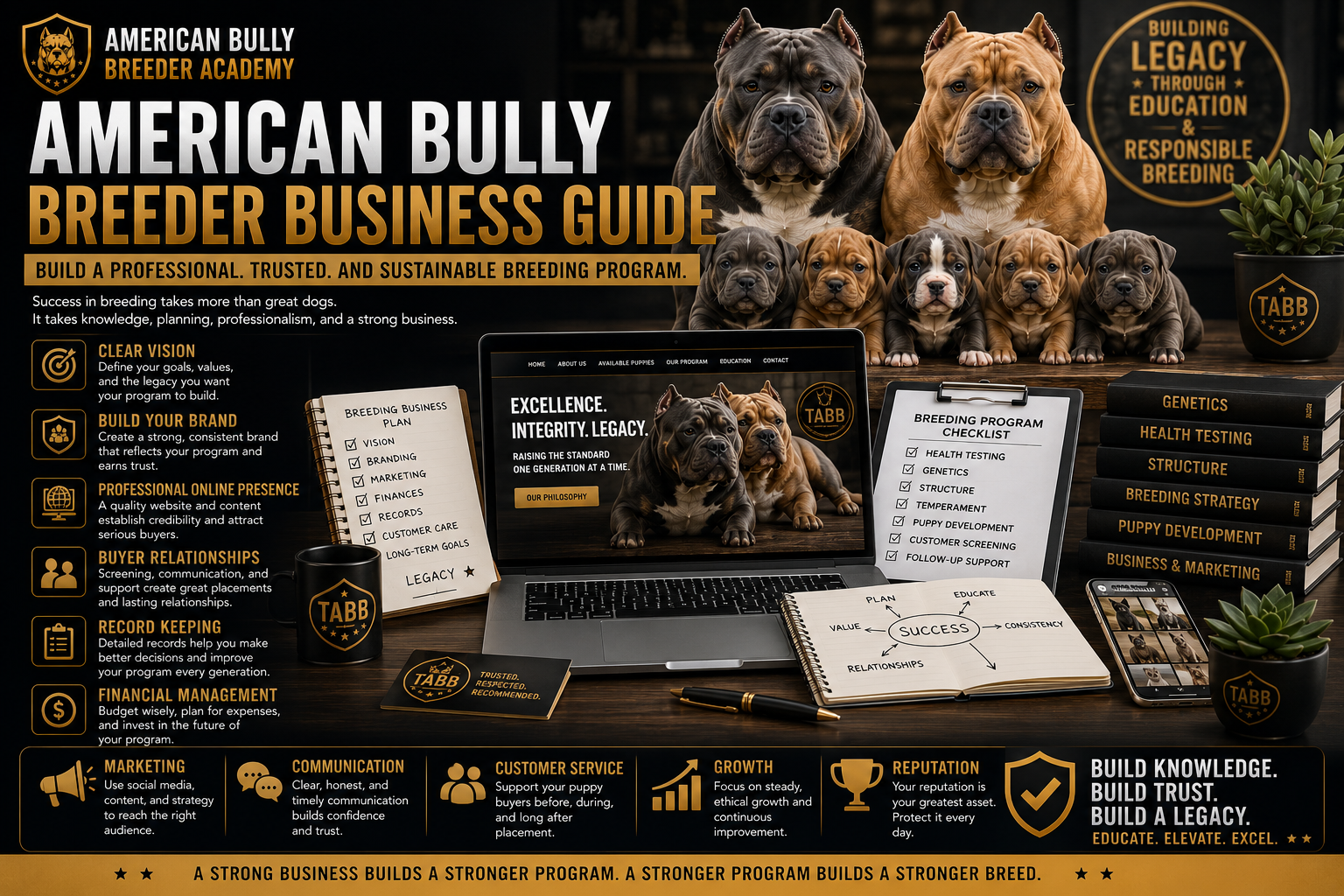
Whether a breeder produces one litter every few years or operates a larger breeding program, success requires more than producing quality dogs. Responsible breeders must manage finances, marketing, customer relationships, record keeping, reputation, and long-term planning.
A breeding program is both a passion and a responsibility. The most successful breeders learn how to balance breed improvement with professional business practices.
This guide serves as the foundation of the American Bully Breeder Business Academy and explains how to build a responsible, sustainable, and respected breeding program.
Why Breeders Need Business Skills
Many new breeders focus exclusively on dogs.
While dogs should always remain the priority, business skills help breeders:
- Stay organized
- Improve customer experience
- Manage expenses
- Build trust
- Maintain professionalism
- Create long-term sustainability
A breeding program cannot thrive if the business side is neglected.
Breeding Is Not a Get-Rich-Quick Business
One of the biggest misconceptions about breeding is that it is easy money.
Responsible breeding often involves significant investments.
Common expenses include:
- Health testing
- Veterinary care
- Emergency care
- Nutrition
- Housing
- Equipment
- Registration fees
- Marketing
- Website management
- Transportation
Successful breeders focus on quality and long-term growth rather than short-term profit.
Build a Clear Vision
Every successful business begins with a clear vision.
Ask yourself:
What type of breeder do I want to become?
What will my program be known for?
What values guide my decisions?
What goals do I have for the next five years?
Programs with clear direction often grow more consistently.
Your Reputation Is Your Greatest Asset
Dogs may attract attention.
Reputation earns trust.
A breeder’s reputation is built through:
- Honesty
- Communication
- Transparency
- Education
- Consistency
Buyers often choose breeders they trust rather than simply choosing the cheapest puppy available.
Protecting your reputation should always be a priority.
Develop a Professional Website
Today, a website is often the first impression potential buyers have of a breeding program.
A professional website should include:
About Page
Explain your breeding philosophy.
Available Puppies
Provide accurate information.
Health Information
Show your commitment to responsible breeding.
Contact Information
Make communication simple.
Educational Content
Help establish authority and trust.
Educational websites often attract future buyers long before they are ready to purchase a puppy.
Continue Learning
→ About Our Breeding Philosophy
Education Creates Authority
The most respected breeders often become educators.
Educational content helps:
- Build trust
- Demonstrate knowledge
- Improve SEO
- Attract future buyers
- Support breed education
Topics may include:
- Structure
- Genetics
- Health
- Puppy development
- Temperament
- Responsible breeding
Breeders who educate often become recognized authorities within their breed.
American Bully Breeder Academy
Build knowledge. Build trust. Build a lasting legacy.
Learn genetics, structure, health testing, breeding strategy, and program development.

Build knowledge. Build trust. Build a lasting legacy.
Keep Detailed Records
Professional breeders document everything.
Important records include:
Health Testing
Maintain testing history and results.
Breeding Records
Track pairings and outcomes.
Puppy Records
Monitor development and growth.
Financial Records
Track expenses and revenue.
Customer Records
Document communications and placements.
Strong records support better decisions.
Develop Buyer Screening Procedures
Not every home is the right home.
Responsible breeders carefully evaluate potential buyers.
Screening may include:
- Applications
- Interviews
- Lifestyle discussions
- Experience assessments
The goal is matching puppies with suitable homes.
Good placements protect both the puppy and the breeder’s reputation.
Communication Matters
One of the easiest ways to stand out as a breeder is through communication.
Buyers appreciate breeders who:
- Respond promptly
- Provide updates
- Answer questions
- Offer guidance
Strong communication builds confidence and trust.
Create a Consistent Brand
Branding helps people recognize your program.
Your brand includes:
- Logo
- Website
- Social media
- Messaging
- Reputation
Consistency creates professionalism.
Over time, a strong brand becomes a valuable asset.
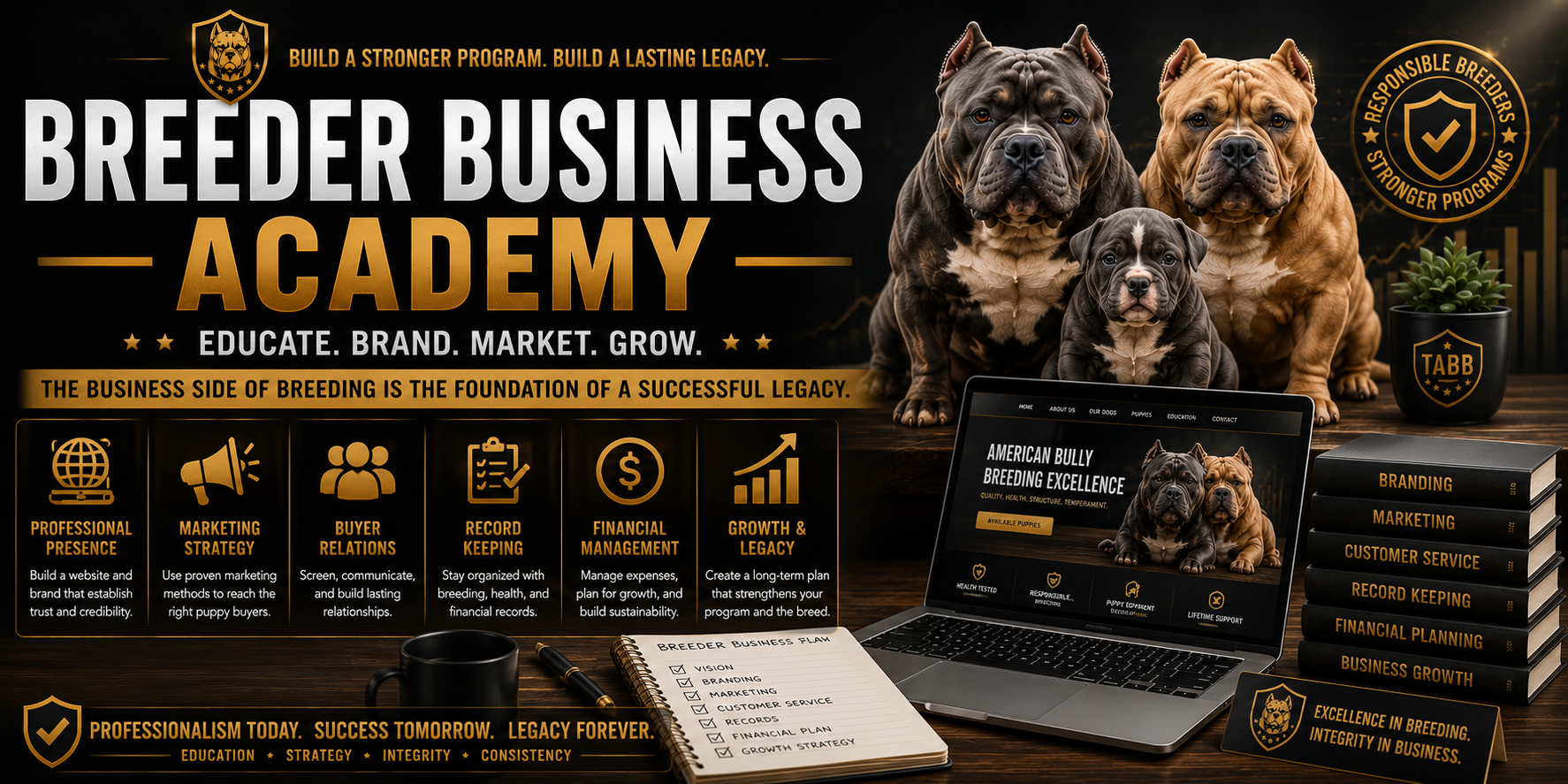
Learn marketing, branding, customer service, and sustainable program growth.
Use Social Media Responsibly
Social media can be a powerful tool when used correctly.
Effective content includes:
- Educational posts
- Puppy updates
- Program updates
- Breeding education
- Responsible ownership content
Avoid focusing solely on sales.
Education and transparency often create stronger long-term engagement.
Build Relationships Within the Community
Successful breeders rarely operate alone.
Strong relationships can provide:
- Mentorship
- Learning opportunities
- Collaboration
- Networking
Community involvement contributes to long-term growth and credibility.
Customer Service Continues After Placement
A breeder’s responsibility does not end when a puppy leaves.
Successful breeders continue supporting buyers through:
- Training guidance
- Feeding advice
- Development questions
- General support
Post-placement support strengthens relationships and referrals.
Financial Planning for Breeders
Breeding programs should be managed responsibly.
Financial planning includes:
Emergency Funds
Unexpected veterinary expenses occur.
Budgeting
Understand operational costs.
Long-Term Investments
Health testing, education, and infrastructure support future growth.
Record Keeping
Accurate financial records simplify decision-making.
Professional breeders treat finances seriously.
Avoid Common Business Mistakes
Lack of Planning
Programs need clear goals.
Poor Communication
Communication problems damage trust.
No Website
A weak online presence limits growth.
Chasing Trends
Trends change quickly.
Neglecting Education
Learning should never stop.
Ignoring Reputation
Trust takes years to build and moments to lose.
Think Long-Term
The most successful breeders think in decades rather than months.
They focus on:
- Breed improvement
- Program consistency
- Reputation
- Education
- Relationships
Long-term thinking creates stronger programs.
Building a Legacy
Every breeding program eventually becomes known for something.
The question is:
What do you want your program to be known for?
The strongest programs become known for:
- Quality
- Consistency
- Integrity
- Education
- Contribution to the breed
Legacy is built through thousands of small decisions made over time.
Final Thoughts
Building a successful American Bully breeding program requires more than producing quality dogs.
It requires professionalism, communication, organization, education, and long-term planning.
The breeders who focus on both breed improvement and responsible business practices often create the strongest and most respected programs.
A sustainable breeding business is built on trust, reputation, knowledge, and commitment to the future of the breed.
When these principles guide decisions, breeders position themselves for long-term success.
Continue Your Breeder Education
Previous Pillars
→ How to Become an American Bully Breeder
→ Responsible American Bully Breeding Practices
→ American Bully Genetics Explained
→ American Bully Bloodlines Explained
→ American Bully Structure Academy
→ How to Select Breeding Stock
→ American Bully Whelping Guide
→ Building an American Bully Breeding Program
→ Health Testing for American Bullies
Future Business Academy Articles
→ Creating a Breeder Website
→ Marketing for Dog Breeders
→ Social Media for Breeders
→ Puppy Applications and Buyer Screening
→ Customer Service for Breeders
→ Record Keeping Systems
→ Building a Recognizable Brand
→ Growing a Breeding Program Responsibly
→ Email Marketing for Breeders
→ Creating Educational Content

Explore Capcity Bullys
See how education, structure, genetics, health testing, puppy development, and long-term program planning come together in a real-world American Bully breeding program.
[Explore Capcity Bullys Banner Here]
Breeder Academy Navigation
Previous: Health Testing for American Bullies
Current: American Bully Breeder Business Guide
FAQ Schema Questions
Can dog breeding be a business?
Yes. Responsible breeding programs require planning, record keeping, customer service, marketing, and financial management to operate successfully.
Do breeders need a website?
A professional website helps establish trust, educate buyers, showcase available puppies, and improve online visibility.
Why is branding important for breeders?
Branding helps create recognition, trust, and consistency across websites, social media, and customer interactions.
What should breeders track in their records?
Breeders should maintain health records, breeding records, financial records, puppy development records, and customer communications.
How do breeders build a good reputation?
Breeders build strong reputations through honesty, transparency, communication, education, responsible breeding practices, and long-term consistency.
Academy Track
Breeder Business Academy
(Genetics Academy, Structure Academy, Whelping Academy, Health Testing Academy, Program Development Academy, and Business Academy)