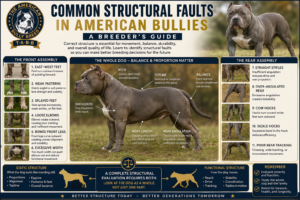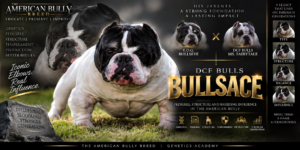

Bloodlines are one of the most discussed topics in the American Bully community.
Ask breeders what makes a particular dog special, and you’ll often hear references to influential bloodlines such as Bullsace, Bape, Devilspit, Miagi, Remyline, Razor’s Edge, Gottiline, or other well-known names. While many enthusiasts recognize these names, far fewer truly understand what bloodlines are, how they develop, and why they matter.
For breeders, understanding bloodlines is essential. Bloodlines help predict traits, identify consistency, guide breeding decisions, and shape the long-term direction of a breeding program.
This guide explains American Bully bloodlines, how they influence breeding outcomes, and how responsible breeders use them to improve future generations.
What Is a Bloodline?
A bloodline is a family of dogs that consistently produces specific traits over multiple generations.
These traits may include:
- Structure
- Bone
- Head type
- Size
- Temperament
- Movement
- Athletic ability
- Breed type
- Consistency
Bloodlines develop when breeders selectively breed dogs that share desirable characteristics over many years.
Over time, those traits become more predictable and recognizable.
A bloodline is not simply a famous dog.
It is the genetic influence that dog leaves behind through generations of descendants.
Why Bloodlines Matter
Bloodlines help breeders make more informed breeding decisions.
While individual dogs are important, pedigrees often reveal more about future outcomes than a single dog standing in front of you.
Bloodlines help breeders:
- Predict structure
- Understand temperament trends
- Evaluate consistency
- Identify strengths
- Recognize weaknesses
- Build breeding programs
The strongest breeding programs are built around understanding and utilizing bloodlines effectively.
Bloodlines Are Genetics in Action
A bloodline is essentially a collection of genetics that has been concentrated over time.
When breeders discuss bloodlines, they are really discussing:
- Inherited traits
- Predictability
- Genetic influence
- Generational consistency
This is why bloodlines and genetics are closely connected.

Learn inheritance, pedigrees, trait expression, and breeding strategy.
Continue Learning
→ American Bully Genetics Explained
→ Trait Inheritance Explained (Coming Soon)
Famous Bloodlines in the American Bully Community
Throughout the breed’s development, several influential bloodlines have had a significant impact on modern American Bullies.
Examples include:
Razor’s Edge
Known for helping shape the early American Bully breed and producing balanced companion-oriented dogs.
Gottiline
Often associated with heavier bone, muscle, and bully breed characteristics.
Remyline
A bloodline that influenced many modern American Bully pedigrees through consistency and recognizable type.
Miagi
Known for producing compact, muscular dogs with strong breed type.
Bape
A highly influential bloodline known for producing compact, powerful dogs with impressive head pieces and breed character.
Devilspit
Often associated with structure, muscle, and consistency in many modern breeding programs.
Bullsace
A respected bloodline that has influenced numerous programs through structure, temperament, and breed quality.
Understanding Influence vs Popularity
One mistake many new breeders make is confusing popularity with quality.
A famous dog may become popular because:
- Social media exposure
- Marketing
- Color production
- Recent trends
An influential bloodline becomes respected because it consistently produces quality dogs over multiple generations.
Responsible breeders focus on influence and consistency rather than hype.
Bloodlines Do Not Guarantee Quality
One of the most important lessons breeders must learn is that bloodlines alone do not determine quality.
Having famous names in a pedigree does not automatically make a dog exceptional.
Every dog must still be evaluated individually.
Breeders should evaluate:
- Structure
- Movement
- Temperament
- Health
- Overall quality
A strong pedigree can improve probabilities, but it cannot replace proper evaluation.
Continue Learning
→ How to Select Breeding Stock
→ American Bully Structure Academy
Understanding Pedigrees
Pedigrees help breeders understand how bloodlines interact.
A pedigree reveals:
- Ancestors
- Genetic concentration
- Influential dogs
- Breeding patterns
- Potential strengths
- Potential weaknesses
Studying pedigrees allows breeders to look beyond individual dogs and evaluate the broader genetic picture.
Continue Learning
Bloodline Concentration
Some breeders intentionally concentrate bloodlines through line breeding.
The goal is to increase consistency by strengthening specific traits.
Potential benefits include:
- Greater predictability
- Consistent type
- Strong trait concentration
Potential risks include:
- Reduced diversity
- Increased genetic weaknesses
- Loss of hybrid vigor
Responsible breeders understand both the advantages and risks before making breeding decisions.
Continue Learning
→ Line Breeding vs Outcrossing
→ Genetic Diversity in Breeding Programs (Coming Soon)
What Breeders Should Look for in Bloodlines
Rather than chasing famous names, breeders should study what a bloodline consistently produces.
Questions to ask:
Does it produce sound structure?
Structure remains one of the most important inherited traits.
Does it produce stable temperaments?
Temperament should always be a priority.
Does it produce consistency?
The best bloodlines produce predictable results generation after generation.
Does it complement your program?
Not every bloodline fits every breeding goal.
Building a Program Around Bloodlines
Successful breeders build programs around carefully selected bloodlines that support their vision.
Examples of breeding goals include:
- Improving structure
- Producing more compact dogs
- Increasing athleticism
- Enhancing breed type
- Improving temperament
- Creating consistency
Every breeding decision should move the program closer to its long-term goals.
Bloodlines and Structure
Many respected bloodlines become known for producing specific structural traits.
Examples include:
- Strong toplines
- Better shoulder placement
- Heavy bone
- Balanced proportions
- Functional movement
Structure should remain one of the primary considerations when evaluating any bloodline.
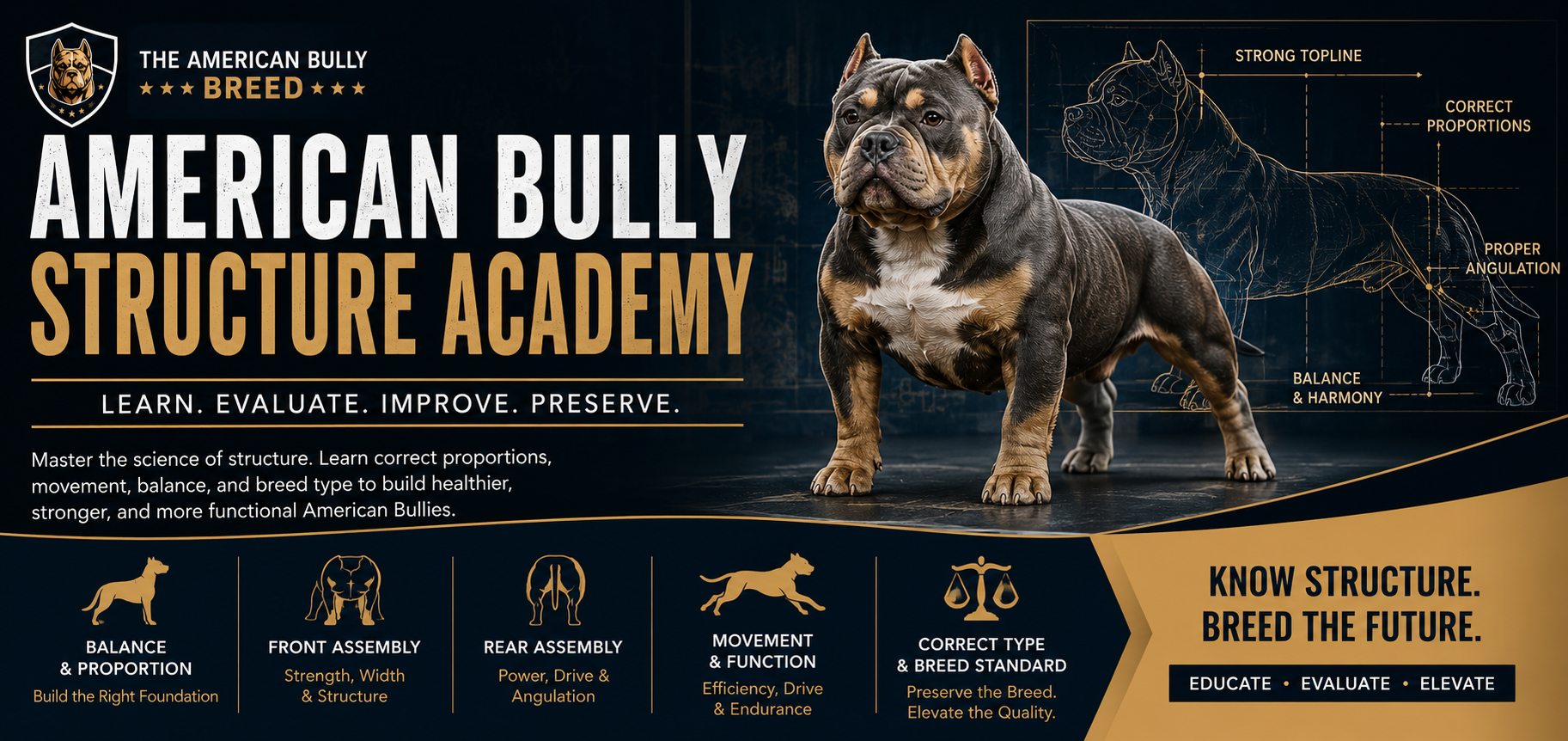
Understand balance, movement, proportions, and functional structure.
Continue Learning
→ Why Structure Matters in American Bullies
→ American Bully Structure Guide
→ Good Structure vs Bad Structure in Micro Bullies
Bloodlines and Temperament
Temperament is often overlooked when discussing bloodlines.
However, responsible breeders understand that temperament is highly important.
Bloodlines can influence:
- Confidence
- Stability
- Trainability
- Social behavior
- Family suitability
Breeding programs should prioritize temperament just as much as physical traits.
Common Bloodline Mistakes
Chasing Famous Names
Famous does not always mean superior.
Ignoring Structure
Structure should never be sacrificed for pedigree prestige.
Breeding for Hype
Trends come and go.
Strong breeding principles remain.
Not Studying Pedigrees
Understanding generations is far more important than memorizing names.
Focusing on One Dog
Evaluate entire families of dogs rather than a single standout individual.
The Future of American Bully Bloodlines
The future of the breed depends on responsible breeders making informed decisions.
The best bloodlines will continue to be those that consistently produce:
- Sound structure
- Stable temperament
- Good health
- Breed type
- Long-term quality
Preserving and improving these traits should always be the goal.
Final Thoughts
Bloodlines are one of the most powerful tools available to breeders.
However, bloodlines should never replace proper evaluation.
The best breeders use bloodlines as part of a larger strategy that includes genetics, structure, temperament, health, and long-term breeding goals.
Understanding bloodlines allows breeders to make more informed decisions and build stronger breeding programs generation after generation.
Continue Your Bloodline Education
Next Articles
→ Line Breeding vs Outcrossing
→ Genetic Diversity in Breeding Programs (Coming Soon)
→ Color Genetics Explained (Coming Soon)
→ Selecting Bloodlines for Your Program (Coming Soon)
Explore the Genetics Academy
Continue learning about:
- Genetics
- Pedigrees
- Trait Inheritance
- Line Breeding
- Genetic Diversity
- Breeding Strategy
[American Bully Genetics Academy]

Explore Capcity Bullys
Learn how bloodlines, structure, temperament, and breeding goals come together in a real-world American Bully breeding program.
Breeder Academy Navigation
Previous: American Bully Genetics Explained
Next: American Bully Structure Academy
Related Pillars
→ How to Become an American Bully Breeder
→ Responsible American Bully Breeding Practices
→ American Bully Structure Academy
→ How to Select Breeding Stock
→ Building an American Bully Breeding Program
FAQ Schema Questions
What is an American Bully bloodline?
An American Bully bloodline is a family of dogs that consistently produces specific traits such as structure, temperament, size, movement, and breed type over multiple generations.
Why are bloodlines important?
Bloodlines help breeders predict traits, evaluate pedigrees, identify strengths and weaknesses, and make more informed breeding decisions.
Do famous bloodlines guarantee quality?
No. Bloodlines improve predictability, but every dog must still be evaluated individually for structure, temperament, health, and overall quality.
What is the difference between bloodlines and pedigrees?
A bloodline refers to inherited family traits, while a pedigree is the documented ancestry showing where those bloodlines come from.
Should breeders focus only on bloodlines?
No. Responsible breeders evaluate genetics, structure, temperament, health, and breeding goals in addition to bloodlines.