

Focus Keyword: american bully bloodlines
The American Bully breed is known for its impressive variety of styles, structures, and pedigrees. While many people focus on appearance alone, experienced breeders and enthusiasts understand that bloodlines play a major role in shaping structure, temperament, consistency, and overall breed quality.
Understanding American Bully bloodlines helps owners make informed decisions when selecting a puppy, evaluating a pedigree, researching breeding programs, or learning more about the breed itself.
In this guide, we’ll explore what bloodlines are, why they matter, and how some of the most influential names in the American Bully world have helped shape today’s breed.
What Are American Bully Bloodlines?
A bloodline refers to a dog’s genetic ancestry and pedigree history. Bloodlines represent generations of selective breeding designed to preserve specific traits.
These traits may include:
✔️ Structure
✔️ Muscle development
✔️ Head type
✔️ Bone density
✔️ Movement
✔️ Temperament
✔️ Consistency
✔️ Overall breed type
Every American Bully carries a pedigree that traces back through parents, grandparents, and earlier generations. Understanding those ancestors helps breeders predict the traits future generations may inherit.
Why Bloodlines Matter
Bloodlines are far more important than color alone.
A visually impressive dog may attract attention initially, but strong bloodlines often contribute to consistency in:
- Structure
- Temperament
- Movement
- Breed type
- Predictability
Responsible breeders use pedigree knowledge to make informed decisions that improve the breed over time.
The most respected programs focus on producing dogs that are balanced, stable, structurally sound, and consistent generation after generation.
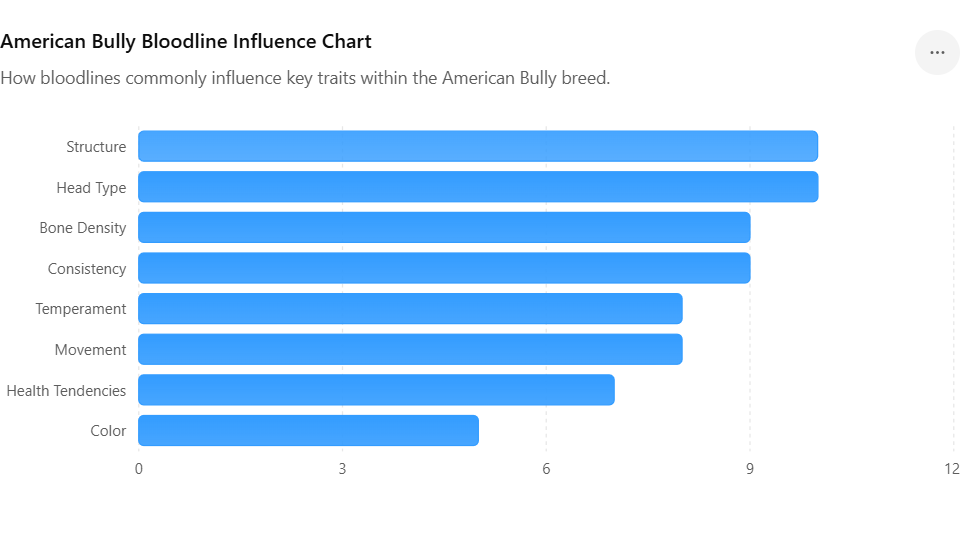
Bloodlines Influence More Than Appearance
Many newcomers assume bloodlines only affect how a dog looks.
In reality, genetics can influence:
Structure
Bone, proportions, topline, chest development, movement, and overall balance are strongly influenced by genetics.
For a deeper understanding of how genetics affect physical development, see:
➡ How Genetics Influence Structure in American Bullies
Temperament
Confidence, stability, social behavior, and trainability are often influenced by generations of careful selection.
Consistency
Strong bloodlines help breeders produce predictable results rather than random outcomes.
Breeding Potential
Dogs from proven pedigrees often provide more reliable foundations for future breeding programs.
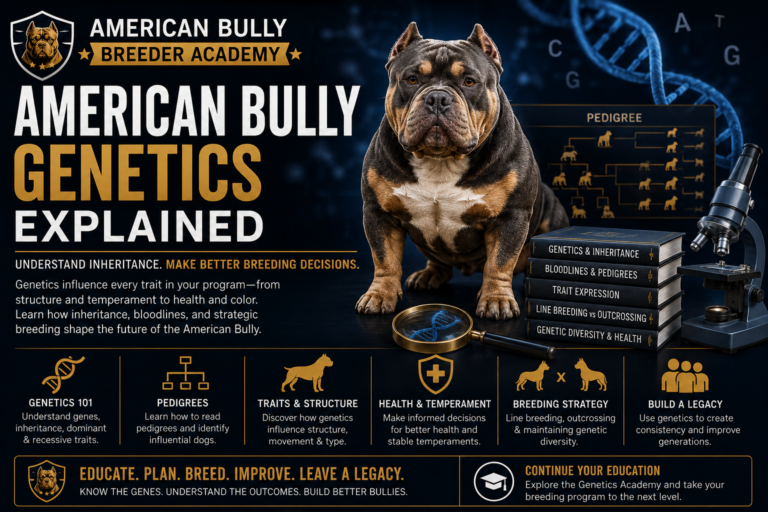
Understanding Pedigrees
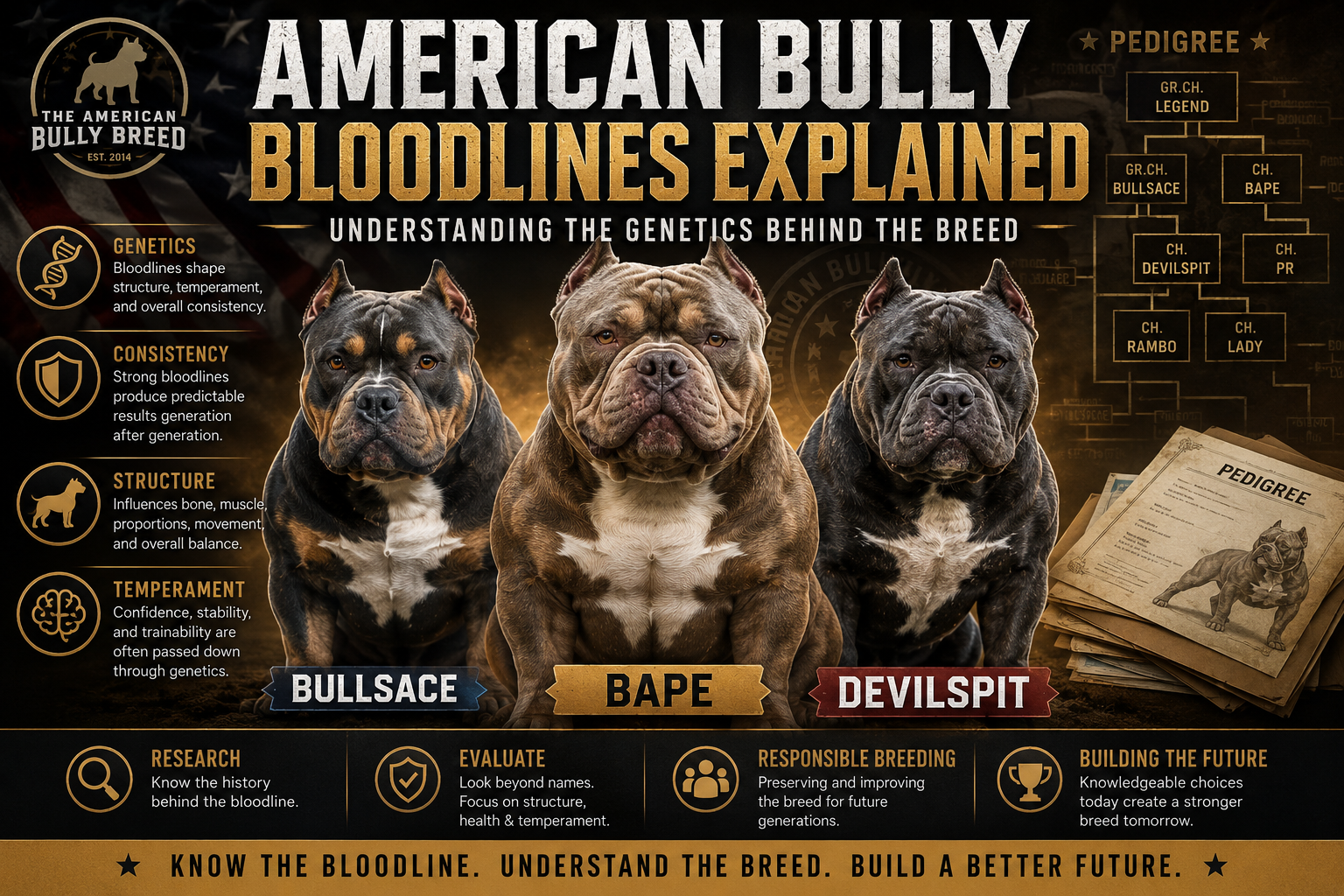
A pedigree is essentially a family tree.
It allows breeders and owners to identify:
- Important ancestors
- Proven producers
- Influential bloodlines
- Breeding patterns
- Genetic consistency
A pedigree tells the story behind the dog.
PUPPY
/ \
SIRE DAM
/ \ / \
GRANDFATHER GRANDMOTHER GRANDFATHER GRANDMOTHER
/ \ / \ / \ / \
GGP GGM GGP GGM GGP GGM GGP GGM
GGP = Great Grandparent
GGM = Great Grandparent
To learn more about evaluating pedigrees:
➡ Understanding American Bully Pedigrees
Some of the Most Influential American Bully Bloodlines
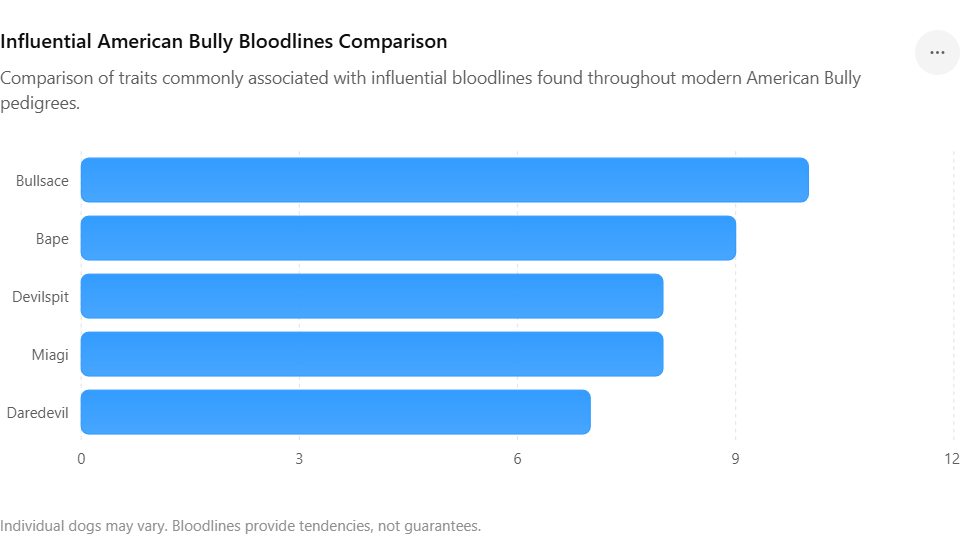
Over the years, several bloodlines have had a significant impact on the breed.
While every program utilizes bloodlines differently, these names continue to appear throughout many respected pedigrees.
Bullsace Bloodline
Bullsace remains one of the most influential names in modern American Bully breeding.
Known for:
✔️ Exceptional structure
✔️ Strong bone
✔️ Wide chest development
✔️ Consistent bully type
✔️ Powerful presence
Many breeders continue utilizing Bullsace descendants because of the consistency and quality the bloodline is known for producing.
Related Reading
➡ The American Bully Bullsace Bloodline: Legacy, Structure, and Impact
Bape Bloodline
The Bape bloodline is widely recognized throughout the Micro Bully community.
Bape descendants are often known for:
✔️ Compact frames
✔️ Massive heads
✔️ Thick bone
✔️ Heavy muscle
✔️ Strong bully expression
The influence of Bape can be found throughout many successful Micro Bully programs.
Related Reading
➡ Understanding the Bape Bloodline in Micro Bullies
Devilspit Bloodline
Devilspit has become another recognizable name among American Bully enthusiasts and breeders.
This bloodline is often associated with:
✔️ Compact structure
✔️ Athletic movement
✔️ Strong bully type
✔️ Muscle and substance
✔️ Distinctive appearance
Devilspit descendants continue to influence many respected programs across the breed.
Related Reading
➡ The Devilspit Bloodline Explained
Bloodlines Are Not Everything
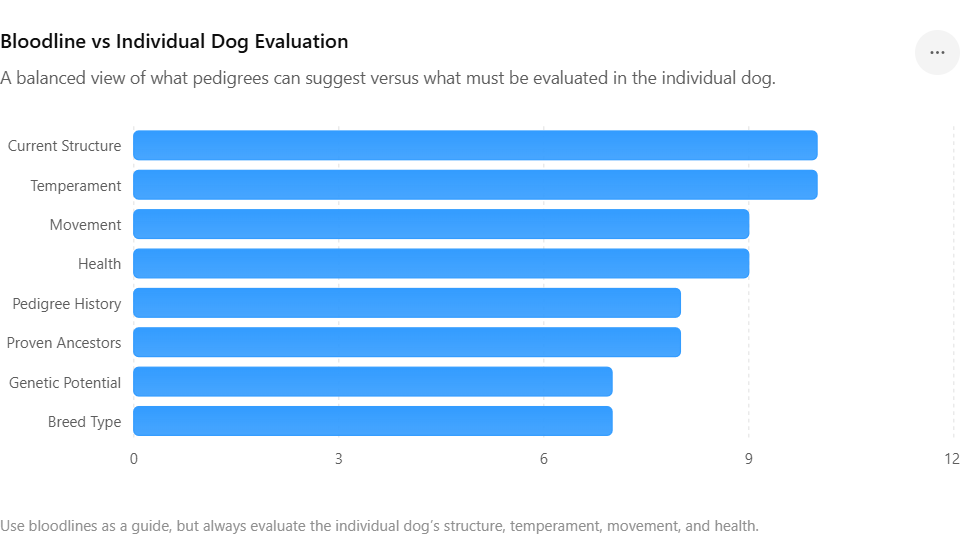
While bloodlines are important, they should never be viewed as the only factor when evaluating a dog.
A pedigree cannot replace:
✔️ Proper structure
✔️ Temperament
✔️ Health
✔️ Movement
✔️ Responsible breeding practices
Even dogs from elite pedigrees should be evaluated as individuals.
The best breeding programs combine strong bloodlines with careful selection and long-term goals.
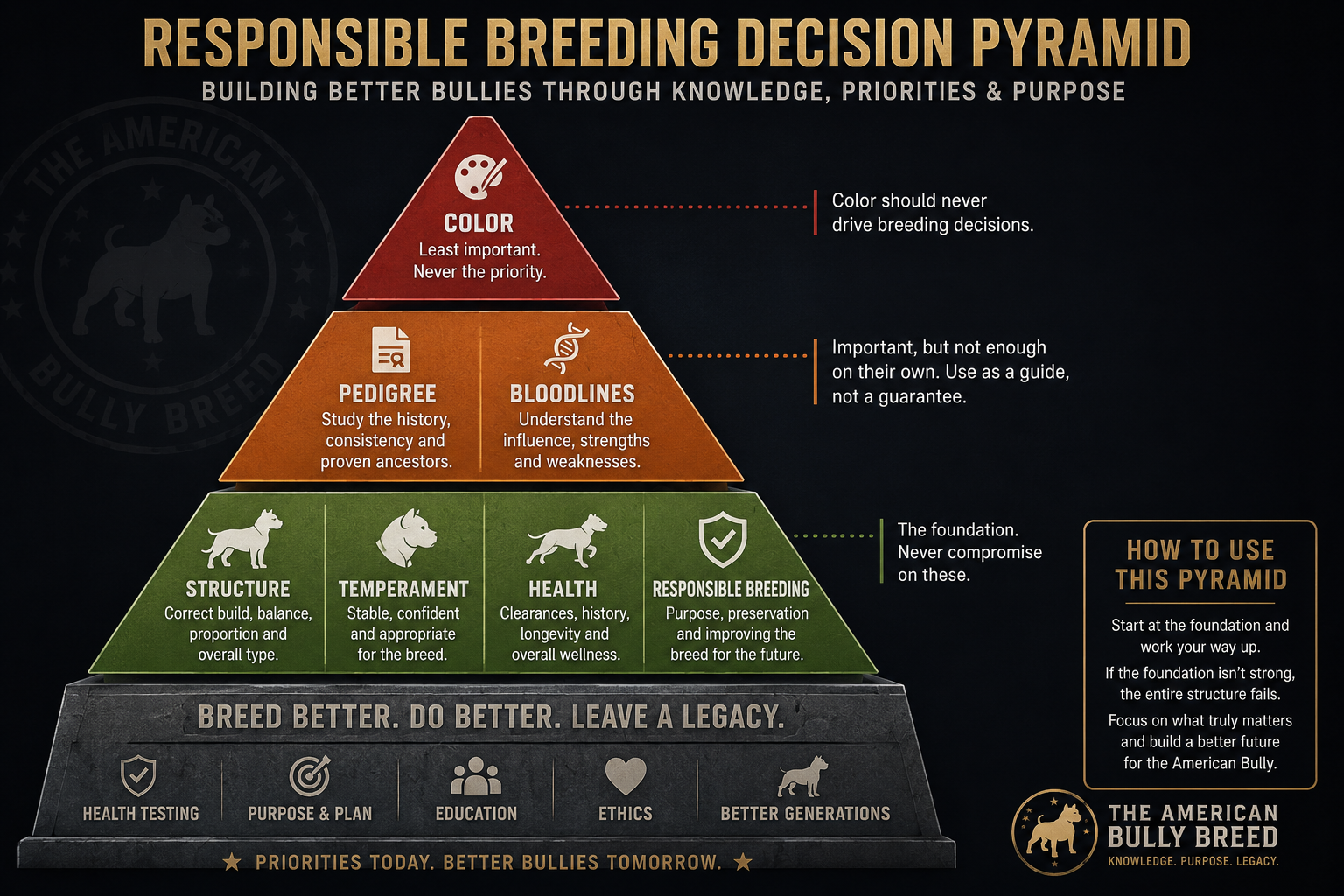
Responsible Breeding Matters More Than Famous Names
One common mistake among newcomers is focusing solely on famous ancestors.
A respected bloodline does not automatically guarantee quality.
Responsible breeding requires:
- Structural evaluation
- Temperament assessment
- Pedigree analysis
- Long-term planning
- Ethical decision-making
The goal should always be improving the breed rather than simply reproducing popular names.
Related Reading
➡ Responsible Breeding Practices for American Bullies
(Link Direction: TABB → TABB)
➡ About Our Breeding Philosophy
Micro Bully Bloodlines vs American Bully Bloodlines
As the Micro Bully has grown in popularity, many enthusiasts have become interested in the bloodlines commonly associated with Micro Bullies.
While many foundations trace back to the American Bully breed, specific bloodline influences have helped shape the modern Micro Bully.
For a complete guide:
➡ Understanding Micro Bully Bloodlines
How Bloodlines Shape the Future of the Breed
The American Bully continues to evolve through selective breeding and responsible preservation efforts.
Breeders who understand genetics, pedigrees, and bloodline history are better equipped to:
✔️ Produce consistency
✔️ Improve structure
✔️ Preserve temperament
✔️ Maintain breed identity
✔️ Support long-term quality
For a deeper understanding of breed structure:
➡ American Bully Structure Guide: What Correct Proportions Look Like
Final Thoughts
Understanding American Bully bloodlines provides valuable insight into the genetics that help shape the breed.
While influential names such as Bullsace, Bape, and Devilspit have contributed significantly to modern American Bullies, true quality comes from more than pedigree alone.
The best American Bullies combine:
✔️ Strong bloodlines
✔️ Correct structure
✔️ Stable temperament
✔️ Sound movement
✔️ Responsible breeding
When those factors come together, breeders can produce dogs that not only look impressive but also represent the long-term future of the breed.
Continue Learning About American Bully Bloodlines
➡ The American Bully Bullsace Bloodline: Legacy, Structure, and Impact
➡ Understanding the Bape Bloodline in Micro Bullies
➡ The Devilspit Bloodline Explained
➡ Understanding Micro Bully Bloodlines
➡ Responsible Breeding Practices for American Bullies
➡ How Genetics Influence Structure in American Bullies
➡ Understanding American Bully Pedigrees
➡ American Bully Structure Guide: What Correct Proportions Look Like
➡ About Our Breeding Philosophy