Published by The American Bully Breed (TABB)
The rear assembly is often called the engine of the dog, and for good reason. While the front assembly supports and guides movement, the rear assembly provides the power, drive, and stability that allow an American Bully to move efficiently and confidently.
Whether you’re evaluating breeding stock, selecting a puppy, or learning more about correct structure, understanding the American Bully rear assembly is essential. Proper rear construction contributes to athletic movement, long-term joint health, balance, and overall soundness. Poor rear structure, on the other hand, can limit movement, increase stress on joints, and negatively affect a dog’s quality of life.
In this guide, we’ll explain the anatomy of the rear assembly, common structural faults, how rear angulation influences movement, and what responsible breeders should look for when evaluating American Bullies.

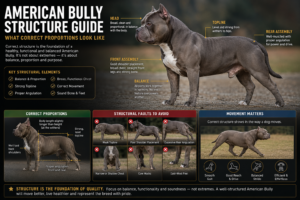
Master American Bully Structure
Learn how every part of an American Bully works together—from the headpiece and front assembly to the rear assembly, topline, movement, and overall balance.
Why the Rear Assembly Matters
A properly built rear assembly allows an American Bully to:
- Generate powerful forward drive
- Maintain balance with the front assembly
- Support heavy muscle mass
- Absorb impact efficiently
- Move smoothly without wasted motion
- Reduce unnecessary stress on hips, knees, and hocks
No matter how impressive a dog’s headpiece or muscle mass may be, poor rear structure limits its ability to move correctly.
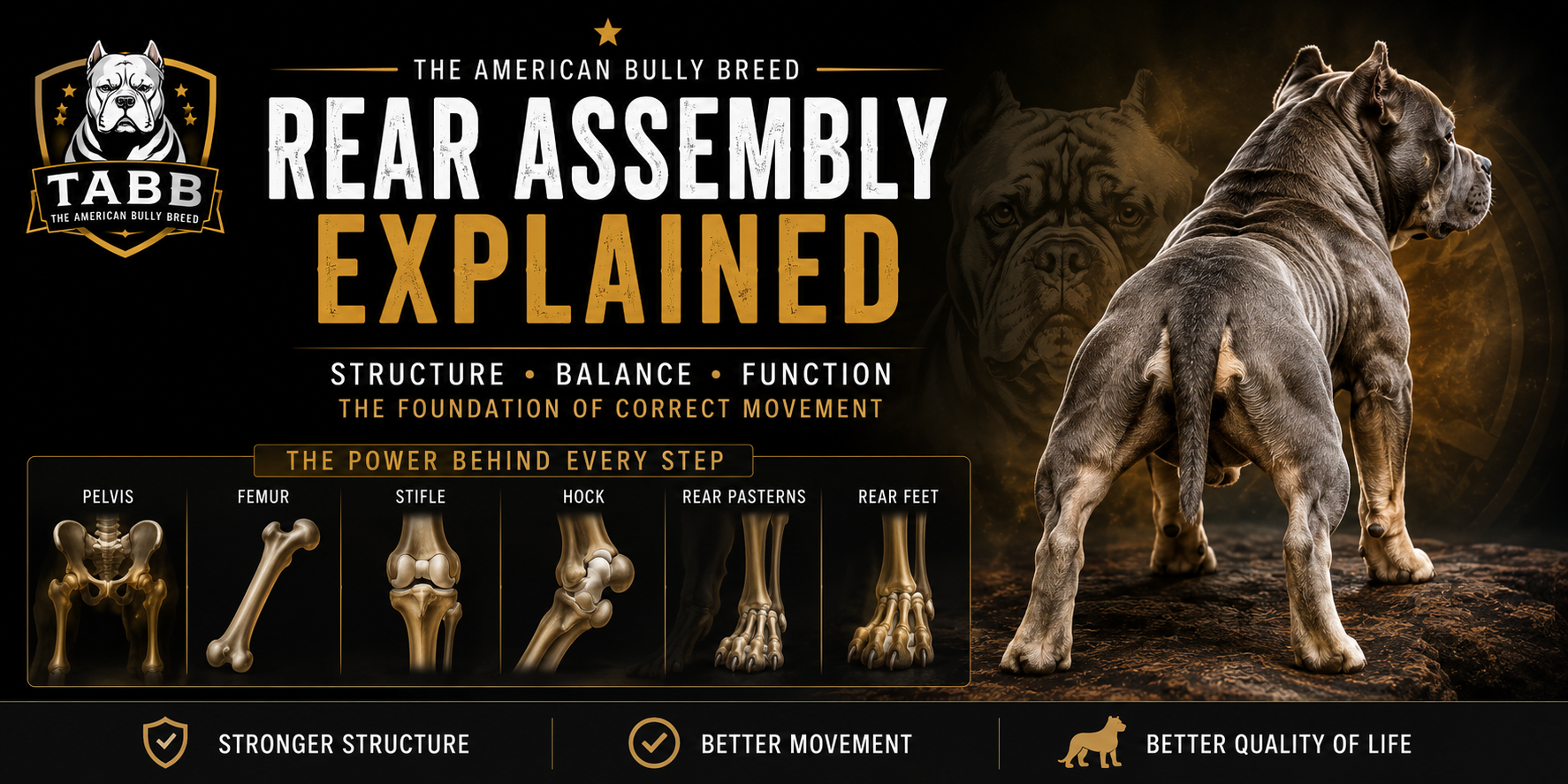
What Makes Up the Rear Assembly?
The rear assembly consists of several interconnected components that work together.
Pelvis
The pelvis forms the foundation of the rear assembly.
Its angle influences:
- rear reach
- drive
- balance
- topline stability
A properly angled pelvis allows efficient propulsion during movement.
Upper Thigh (Femur)
The femur connects the hip to the stifle.
Correct femur length contributes to:
- balanced angulation
- smooth stride
- efficient movement
- proper muscle development
Stifle (Knee Joint)
The stifle is one of the most important joints in the rear assembly.
Correct stifle angulation helps provide:
- flexibility
- drive
- shock absorption
- athletic movement
Too much or too little bend affects gait and efficiency.
Second Thigh (Tibia/Fibula)
The lower thigh works with the femur to create balanced rear angulation.
Correct proportions improve:
- stride length
- balance
- movement efficiency
Hocks
The hock functions similarly to the human ankle.
Strong hocks provide:
- stability
- power
- endurance
- efficient push-off
Weak hocks reduce propulsion and increase injury risk.
Rear Pasterns
Rear pasterns should be:
- short
- strong
- vertical when viewed from behind
Weak rear pasterns often result in instability during movement.
Rear Feet
Correct feet are:
- tight
- compact
- well-arched
- facing straight forward
Feet are the final point of contact with the ground and play an important role in overall movement.
Understanding Rear Angulation
Rear angulation refers to the angles created between:
- pelvis
- femur
- tibia
- hock
Correct angulation creates an efficient stride while maintaining balance with the front assembly.
Proper angulation provides:
- better reach
- stronger drive
- smoother gait
- reduced joint stress
Too much or too little angulation changes how a dog moves.
Correct Rear Assembly
A properly constructed rear should appear:
✓ Balanced
✓ Muscular
✓ Strong
✓ Symmetrical
✓ Well-angulated
✓ Straight when viewed from behind
During movement the rear legs should travel straight without crossing or swinging outward.
Common Rear Assembly Faults
Several faults commonly affect American Bullies.
Cow Hocks
Cow-hocked dogs turn their hocks inward while the feet point outward.
Problems include:
- reduced stability
- inefficient movement
- uneven joint wear
Bowed Rear Legs
Rear legs curve outward instead of remaining straight.
This can reduce balance and proper drive.
Sickle Hocks
Excessive bend at the hock limits extension and reduces efficient propulsion.
Straight Stifles
Insufficient bend produces:
- short stride
- reduced flexibility
- poor rear drive
Over-Angulated Rear
Too much bend can create instability and poor balance.
Although dramatic angles may appear impressive, excessive angulation often reduces functional movement.
Weak Hocks
Weak rear pasterns or hocks reduce:
- stability
- endurance
- pushing power
Rear Assembly and Movement
A correct rear assembly creates efficient propulsion.
When viewed from behind, the legs should:
- remain parallel
- track straight
- move smoothly
- push evenly
Dogs with poor rear construction often display:
- paddling
- crossing over
- wobbling
- short stride
- weak drive
Front and Rear Must Work Together
One of the biggest mistakes beginners make is evaluating only the rear.
Correct structure depends on balance.
A properly angulated rear paired with a poor front assembly creates inefficient movement.
Likewise, an excellent front cannot compensate for a weak rear.
The goal is harmony between both ends of the dog.
Evaluating Rear Assembly in Puppies
Responsible breeders begin evaluating rear structure early, understanding that puppies continue to develop as they mature.
When evaluating puppies, look for:
- balanced proportions
- straight rear legs
- correct feet
- strong hocks
- smooth movement
- equal muscle development
Avoid selecting puppies based solely on color or exaggerated muscle.
Rear Assembly and Responsible Breeding
Great breeders understand that structure directly affects lifelong health.
When selecting breeding stock, they evaluate:
- movement
- hip stability
- rear angulation
- muscle balance
- overall symmetry
- functional soundness
Producing structurally correct American Bullies requires generations of careful selection—not shortcuts.
Why Buyers Should Care About Rear Assembly
Many buyers focus on:
- head size
- muscle
- color
- rare genetics
However, rear structure affects every step the dog takes throughout its life.
A sound rear assembly contributes to:
- healthier joints
- improved mobility
- greater athleticism
- longer working life
- better overall quality of life
Understanding structure helps buyers choose dogs built for longevity—not just appearance.
Explore Capcity Bullys

See Responsible Breeding in Action
At Capcity Bullys, every breeding decision prioritizes structure, movement, health, temperament, and long-term soundness. Discover how these same principles are applied in our breeding program.
Final Thoughts
The rear assembly is the powerhouse of the American Bully. Correct hips, thighs, stifles, hocks, and feet allow the breed to move with strength, balance, and efficiency while supporting lifelong health.
Whether you’re breeding, showing, or purchasing an American Bully, learning to evaluate the rear assembly is one of the most valuable skills you can develop. Combined with proper front assembly and overall balance, sound rear structure forms the foundation of a well-bred American Bully.
📚 Continue Your Structure Academy Journey
Expand your knowledge with these related guides:
- American Bully Structure Academy
- Correct Proportions in the American Bully
- How to Evaluate an American Bully’s Headpiece
- Understanding Front Assembly in American Bullies
- Understanding Toplines in American Bullies (Coming Soon)
- Understanding Movement & Gait in American Bullies (Coming Soon)
- Health Testing for American Bullies
- How to Select Breeding Stock
Footer Navigation
← Previous: Understanding Front Assembly in American Bullies
↑ Up: American Bully Structure Academy
Next →: Understanding Toplines in American Bullies